
If you wear dentures and find yourself plagued by bad breath, you’re definitely not alone. While dentures themselves aren’t inherently stinky, poor denture care, dry mouth, trapped food, and bacterial buildup can certainly contribute to that nasty halitosis. In most cases, a bit of better care will help sort out fresher breath.
Do Dentures Really Stink?
So, by now you may be wondering, “Do dentures cause bad breath?” Well, dentures are basically odorless, but those surfaces and gum-contact areas can still collect plaque, food particles, and some pretty pungent harmful bacteria. The warm, moist environment under a denture is also a bit of a breeding ground for bacteria and fungus.
Bad breath can come from a variety of sources: your dentures, tongue, gums, palate, or remaining natural teeth. If you’re brushing and flossing like a regular pro and your breath still smells like a dumpster, maybe there’s something else going on with your oral health, and it’s time to get to the bottom of it with a dentist. They can check for infection, gum problems, or a denture that just doesn’t fit right.

Why Dentures Smell Bad: Some Common Culprits
This is a fixable issue, but you won’t find the right solution overnight.
Bacteria and Food Trapped on Dentures: A Recipe for Disaster
Denture acrylic can get scratched up and develop tiny little crevices where harmful bacteria, fungi, plaque, and food particles just love to hang out. And let me tell you, these little buggers can produce some pretty unpleasant smells.
Bad Oral Hygiene
Cleaning your dentures is just the first step; you’ve also got to get in there and tackle the tongue, gums, cheeks, and palate. All of these areas can collect bacteria and shed cells that contribute to bad breath, so don’t neglect them.
Wearing Dentures Overnight
Sleeping with dentures can really limit the amount of saliva that gets to the tissues underneath, giving bacteria a chance to run wild. Taking them out at night gives your gums some much-needed rest and lets you clean and soak them properly.
Dry Mouth
Saliva is pretty great at washing away food particles and keeping bacteria under control. When it’s not there, bad breath is more likely to develop. Dry mouth can be caused by medication, aging, or mouth breathing while you sleep.
Dentures that Don’t Fit Right or Are Damaged
Dentures that are too loose can create little pockets where food gets trapped, while a denture with rough or worn acrylic just gives bacteria more places to call home.
Smoking and Drinking Coffee or Wine
Smoking and drinking coffee or wine can all contribute to persistent odors, staining, and rougher denture surfaces that are just a pain to keep clean.
How to Keep Dentures from Causing Bad Breath
Cleaning Your Dentures Regularly
A clean denture is a happy denture, and a fresh one. Here’s what you need to do:
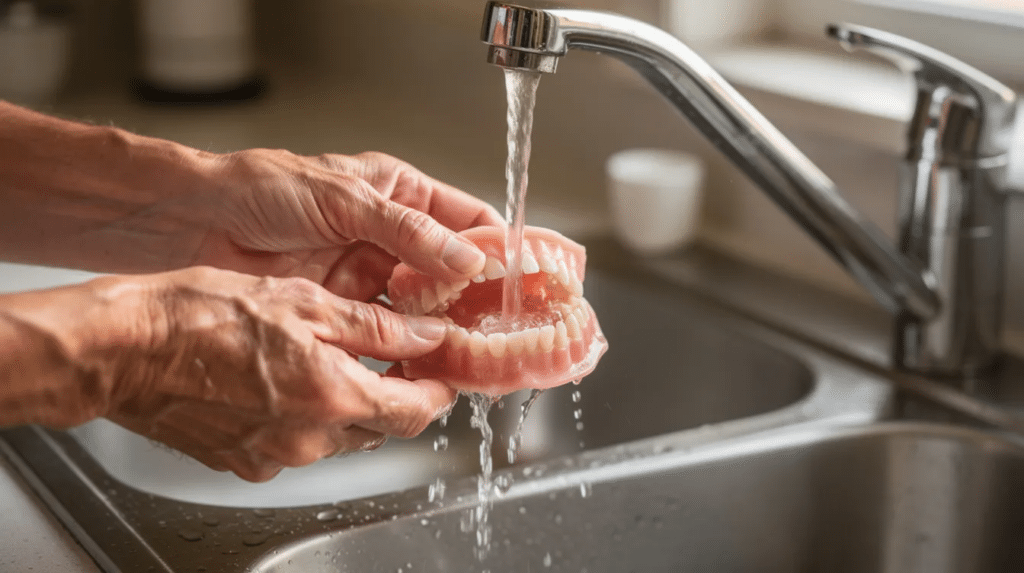
- Take a rinse after meals to get rid of any stray food particles.
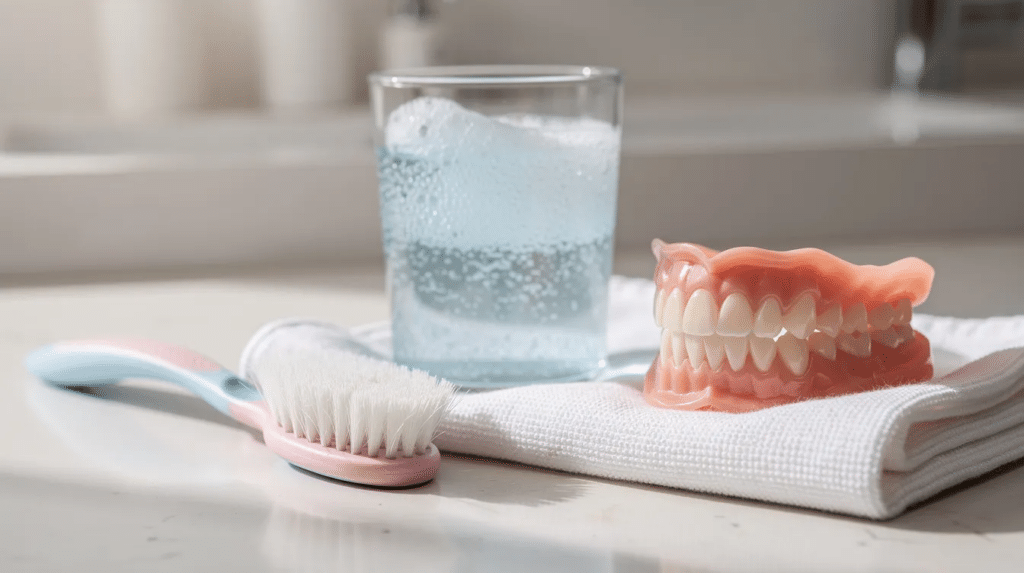
- Brush your dentures every night with a soft-bristled brush and some mild denture cleaner. Don’t use regular toothpaste; it’s too harsh.
- Soak them overnight in a denture-cleaning solution, following the instructions on the packaging.
- Give them a good rinse before putting them back in.
Keep Your Mouth and Your Dentures Clean
When you take out your dentures, take a few minutes to brush your gums, tongue, cheeks, and palate with a soft-bristled toothbrush. Don’t forget to tackle that tongue; it’s a major culprit when it comes to bad breath.
Keep Your Mouth Moist
Drink plenty of water and consider some sugar-free gum or mints to get the saliva flowing. If you breathe through your mouth while you sleep, a humidifier might be just the ticket. And if your medication is causing dry mouth as a side effect, talk to your doctor about alternative medications.
Remove Dentures at Night
Give your gums and oral tissues a break and take out those dentures before you go to bed. It’s a great chance to give them a good clean and soak.
Use Denture Adhesive Wisely
A thin layer of adhesive can really help your denture fit better and prevent food from getting trapped. Just be careful not to use too much; it can leave a residue that’s a pain to clean.
Replace or Reline Worn Dentures
If your dentures are starting to smell like a dumpster, have rough patches, or heavy staining, it might be time to have them checked by a dentist. They can tell you whether it’s time to replace or reline them.
When Bad Breath with Dentures Means Something More
If you’ve been taking care of your dentures and mouth, but bad breath just won’t go away, it’s time to get to the bottom of it with a dentist. Here are some warning signs:
- A persistent bad taste
- Sore, red, or swollen gums
- White patches on the gums or palate
- Burning or irritation
- Bleeding during cleaning
- Persistent odor, heavy staining, or visible buildup on the dentures
Denture Stomatitis and Infections
Ill-fitting or poorly cleaned dentures can cause irritation and infections like denture stomatitis. Fungus can grow in those warm, moist areas under your denture and cause all sorts of problems. Treatment might involve practicing better hygiene, some professional care, or antifungal medication.
Other Possible Causes
When the mouth and dentures look healthy, bad breath can sometimes be down to something going on outside of your teeth, such as a sinus problem, uncontrolled diabetes, acid reflux, or even certain treatments you’re taking or medical conditions you’ve got.
Regular Dental Visits Really Do Matter
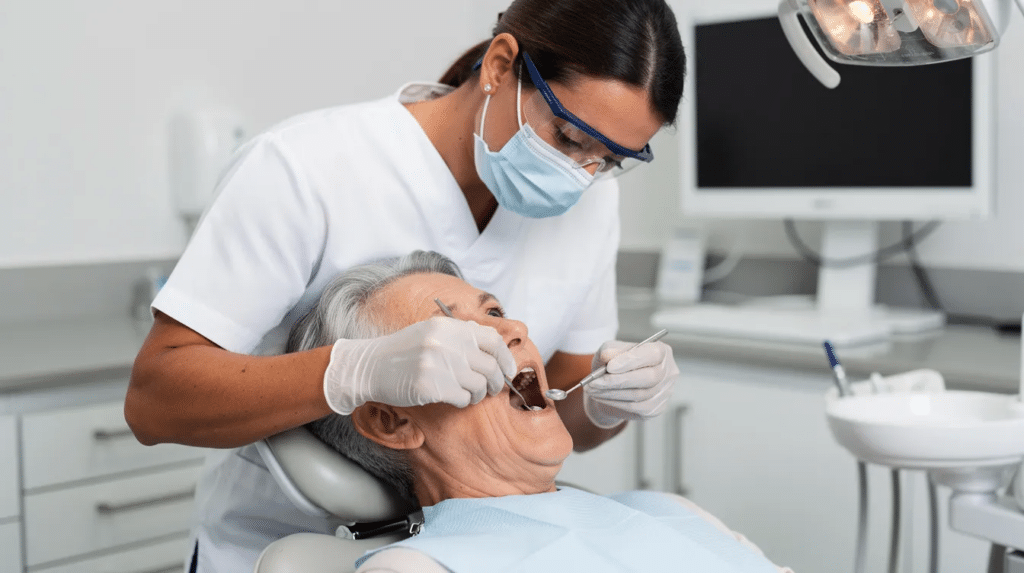
Getting in to see your dentist on a regular basis lets them check over your dentures to make sure they’re a good fit, give them a deep clean in those hard-to-reach areas, and take a look for any infection or other problems that might be going on in your mouth. If bad breath gets a whole lot worse or is accompanied by pain or some other weirdness, like gums or dentures getting all swollen, get yourself to the dentist right away.
And it’s honestly worth it; with a bit of care and attention to your dentures, some good daily hygiene, a bit of moisture, and regular trips to the dentist, you can keep on wearing dentures while smiling with confidence and feeling fresh in the mouth.
FAQ
Can dentures cause bad breath?
Not directly. Dentures are odorless, but bacteria, plaque, food particles, and fungal buildup on or underneath them can cause bad breath.
Why do my dentures smell bad?
Poor cleaning, trapped food, dry mouth, wearing dentures overnight, smoking, and worn or poorly fitting dentures can all contribute to unpleasant odors.
How do I stop my dentures from causing bad breath?
Rinse them after meals, brush them every night with a soft-bristled brush and denture cleaner, soak them overnight, and clean your tongue, gum tissue, cheeks, and palate as well.
Should I sleep with my artificial teeth in?
It’s best to remove them at night. This gives your gums a break and lets you properly clean and soak your dentures, helping reduce bacteria and odors.
When should I see a dentist about bad breath?
If the odor doesn’t go away despite good denture and oral hygiene, get it checked. Persistent bad breath along with sore or swollen gums, white patches, burning, bleeding, or visible buildup may point to an infection or denture fit problem.