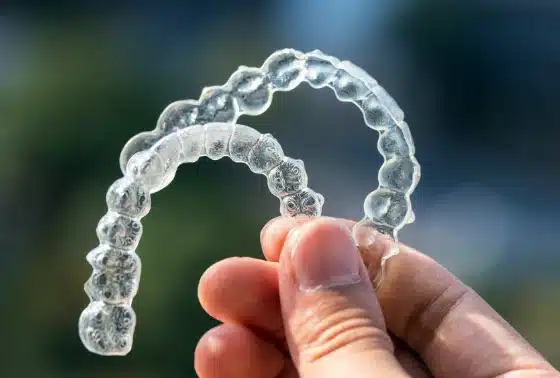
Both of these clear plastic trays can be worn at night, but they serve two entirely different purposes, and if you get them mixed up, you could be in for some problems. A night guard helps protect your teeth from grinding away, and a retainer keeps teeth from drifting out of position after you’ve had orthodontic work done.
Using one in place of the other is just asking for trouble.
- Night guard: not only does this do a great job of absorbing all the stress of grinding and clenching, but it can also save your teeth from getting worn down or worse, fracturing.
- Retainer: this is what keeps your teeth in their correct positions after you’ve had work done with braces or clear aligners; it’s not a ‘just in case’ sort of thing; it’s a vital part of the process.
Don’t get them mixed up. If you use a retainer to try and stop your teeth grinding, it’s going to crack under the pressure and leave your teeth exposed to damage. On the other hand, if you’re using a night guard and it doesn’t have enough ‘hold’ to keep your teeth from shifting, then they are going to move.
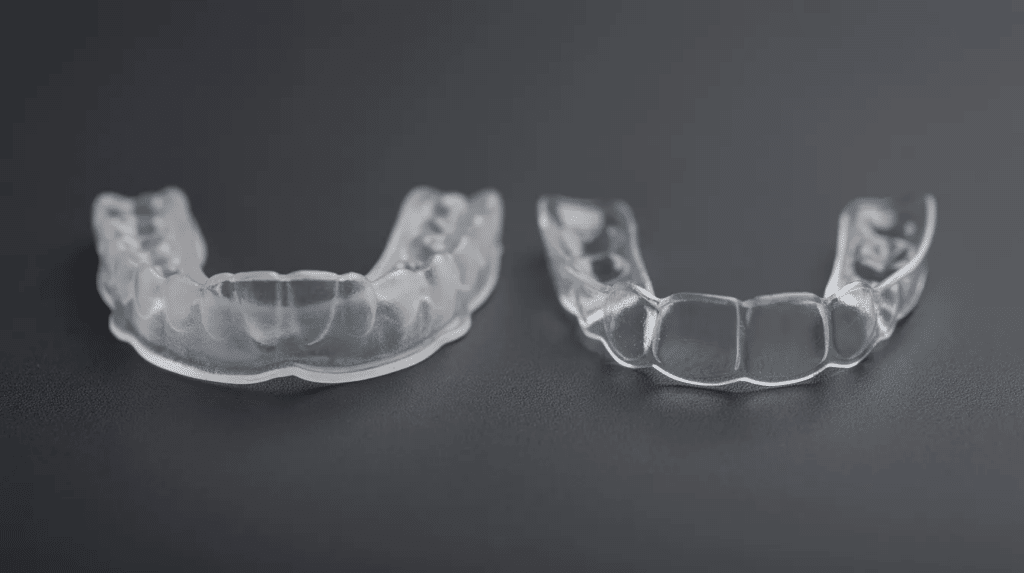
- Key differences: the biggest difference is in terms of size. Retainers are typically much thinner (around 0.75–1 mm), whereas night guards are a bit more substantial (about 1.5–5 mm) and are designed to withstand a lot more force.
- You might need both: some people who have completed orthodontic work and grind their teeth might find that they need a special appliance that can do both jobs; these usually need to be prescribed by a dental professional.
What’s a Mouth Guard (Night Guard)?
A mouthguard is basically a protective shield that needs to be worn over your teeth to stop them from getting damaged from grinding, clenching, or being hit. Night guards are specifically designed to stop you from grinding your teeth whilst you’re asleep, which can cause problems like worn-down enamel, damaged fillings, and a sore jaw.
Night guards are usually a bit thicker than other types of mouthguards, and they’re made out of materials that are designed to absorb or distribute the forces of biting. You can usually get them custom-made from dental impressions or a digital scan, or you can buy over-the-counter boil-and-bite ones. These usually have a very affordable price if saving money is a big deal, but the custom-made night guards are way more comfortable.
What Are Clear Retainers?
A retainer is what you need to keep your teeth in the right position after you’ve had orthodontic treatment. Because teeth naturally start to drift over time, you’ll need to wear a retainer to keep them where you want them for your perfect smile.
The main types of retainers are:
- Clear plastic retainers: these are thin, nearly invisible trays that are vacuum-formed and usually only about 0.75–1 mm thick.
- Hawley retainers: these are acrylic appliances with metal wires that can be adjusted.
- Permanent retainers: these are wires that get fixed to the back of your teeth; these are usually a good option if you’re prone to losing your retainer.
Mouth Guard vs Retainer: The Key Differences
People always get these two mixed up because they look so similar; a clear retainer and some night guards both look like clear plastic trays that you wear over your upper and lower teeth at night. But in dentistry, that’s where the similarity ends.
The big difference is what they’re designed to do, how they’re made, and what happens if you use the wrong one.
| Feature | Night Guard | Clear Retainer |
| Primary function | Protect teeth and jaw from grinding | Hold teeth in position after treatment |
| Thickness | 1.5–5 mm | 0.75–1 mm |
| Material feel | Cushioned, sometimes softer inside | Stiff, rigid, snaps tightly over teeth |
| Designed to absorb bite force | Yes | No |
| Maintains tooth alignment | No | Yes |
| Median survival (vacuum-formed) | Several years for custom guards | ~105 days for clear removable retainers |
Night guards are always getting the bite marks and get worn down over time because that’s what they’re designed to do. But if you use a retainer and it gets subjected to grinding, it’s just going to get cracked, holed, and distorted.
Custom night guards can last anywhere from 5 to 10 years depending on how bad your grinding is. So yes, they serve different purposes, and you can’t mix and match them: using a retainer as a mouth guard will only serve to break it and let your teeth get worn down even more; using a night guard instead of a retainer will let your teeth drift back and open up any gaps.
If you have sleep apnea, check with your doctor first before you start using a night guard.
Will Retainers Help If You Grind Your Teeth?
No, they won’t. Standard retainers are just too thin and not substantial enough to withstand even light grinding forces. If you keep clenching your teeth, it’ll just get cracked or worn down and leave your teeth exposed. Using a retainer as a night guard can also create problems like sharp edges, uneven tooth contact, and more enamel wear.
If you find yourself waking up with a sore jaw, headaches, chipped teeth, or flattened tooth surfaces, then you probably need to talk to your dentist about getting a proper night guard to handle grinding.
Do Mouth Guards Act as Dental Retainers?
Sorry, they don’t. A night guard isn’t designed to hold each tooth in place in the same way that a retainer does. So if you complete an orthodontic treatment and then only wear a night guard, your teeth will start to shift.
Some people who need both orthodontic retention and protection from teeth grinding may need a special appliance that can do both jobs; these usually need to be prescribed by a dental professional.
Knowing if You Need A Night Guard, Retainer, or Both.
It all depends on a few different things: your orthodontic history, your symptoms, your bite, and whether you grind your teeth.
- Just a retainer: you’ve completed orthodontic work, and you don’t have any signs of grinding or jaw discomfort.
- Just a night guard: you have good alignment, but you’ve got some problems with bruxism; you’ve been grinding your teeth, and you wake up with a sore jaw.
- Both: you’ve completed orthodontic work, and you also grind your teeth; you might need a special appliance that can do both jobs, and this should be prescribed and fitted by a dental professional.
If you’re not sure which appliance you need, take your old or current appliance down to your dentist or orthodontist & have them take a gander at how it fits in your mouth, check wear patterns on your teeth, the alignment of your teeth, and also look for signs of grinding (bruxism); they can then advise you on what you need.
Caring for Mouth Guards and Retainers
Both mouth guards and retainers are basically breeding grounds for bacteria, and they get all warped if you handle them wrong, which not only shortens their lifespan but can also create problems with your overall oral health.
- Day-to-day care: give them a rinse after each time you use them, use a soft toothbrush to gently clean them (no harsh toothpaste; that’s just asking for trouble), and give them a proper cleaning with some proper appliance cleaner. As for mouthwashes, avoid using the alcohol based kind with copolyester retainers; it’ll ruin the clarity and might even weaken the material.
- Don’t mess with heat: don’t use hot water, don’t put them in the dishwasher, and for goodness sake don’t leave your appliances in a hot car; it’s just going to distort the plastic and mess up the fit.
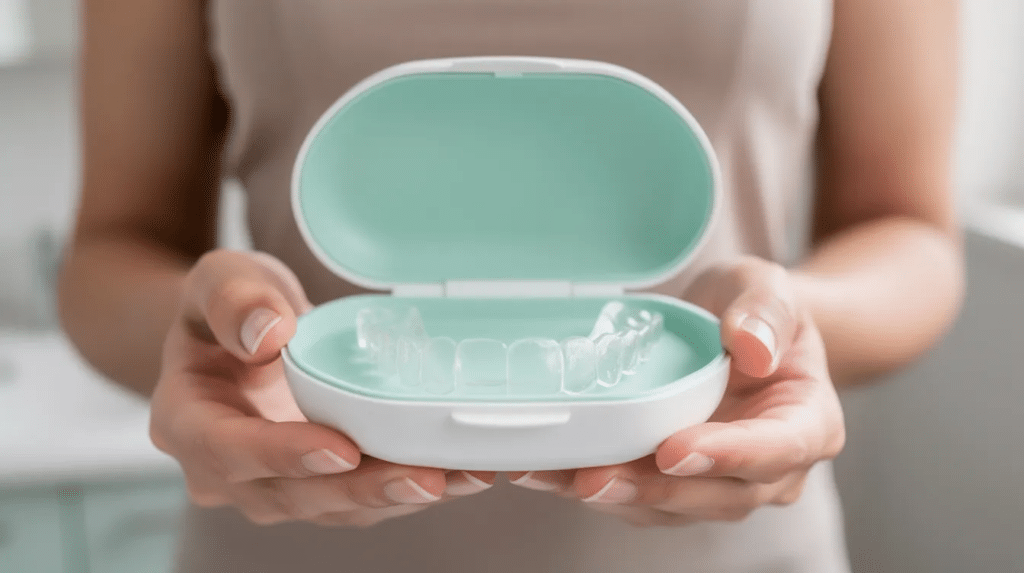
- Where to store them: keep them in their own case when you’re not wearing them so you don’t lose ’em or damage ’em, and make sure it’s nice and ventilated to keep the pets from chomping on them. And please, for the love of all things good, don’t wrap ’em in tissues or napkins; that just creates a mess.
- When to replace them: night guards can last anywhere from 5 to 10 years, but custom ones that’ve been through a lot of grinding will usually last a bit longer. Clear retainers, on the other hand, need replacing pretty quickly, usually within a few months, and fixed ones and Hawley retainers will last an average of 4-5 years before the wire snaps or the retainer comes loose.
By keeping an eye on your appliances and making sure they’re in good nick, you can save a pretty penny in dental work. Getting your dentist to check on them regularly catches any small cracks before they become major, costly problems.
FAQ
Can I wear my night guard and retainer at the same time?
Short answer: no, you can’t. But don’t worry, you can ask your dentist if you can just wear ’em on your top and bottom teeth or if you can even get one that does both jobs.
How long am I supposed to wear my retainer after getting my braces or clear aligners?
Most orthodontists will tell you to wear it all day and all night for a bit, and then it’ll be just a nighttime thing from then on. Just stick to what your orthodontist tells you.
How do I even know if I’m grinding my teeth at night?
Well, you might get a few headaches, or your jaw might be sore, or even a bit of sensitivity in the teeth, or maybe even more serious stuff like flattened teeth or grinding noises while you sleep. Get it checked out by a dentist before you go buying a night guard.
Are store-bought boil & bite night guards the way to go?
They’re usually okay for a short while, but beware: they can be a bit hit or miss in terms of fit, and that can lead to all sorts of problems like a bad bite or even jaw pain, especially if you’ve got issues with your temporomandibular joint (TMJ). Better still, get one from the dentist.
Can I just use hot water to clean my mouth guard or retainer?
No, are you mad? Use cool or lukewarm water, then dry it out properly to keep it fresh and bacteria-free, and simply store it in its own case when you’re not wearing it.