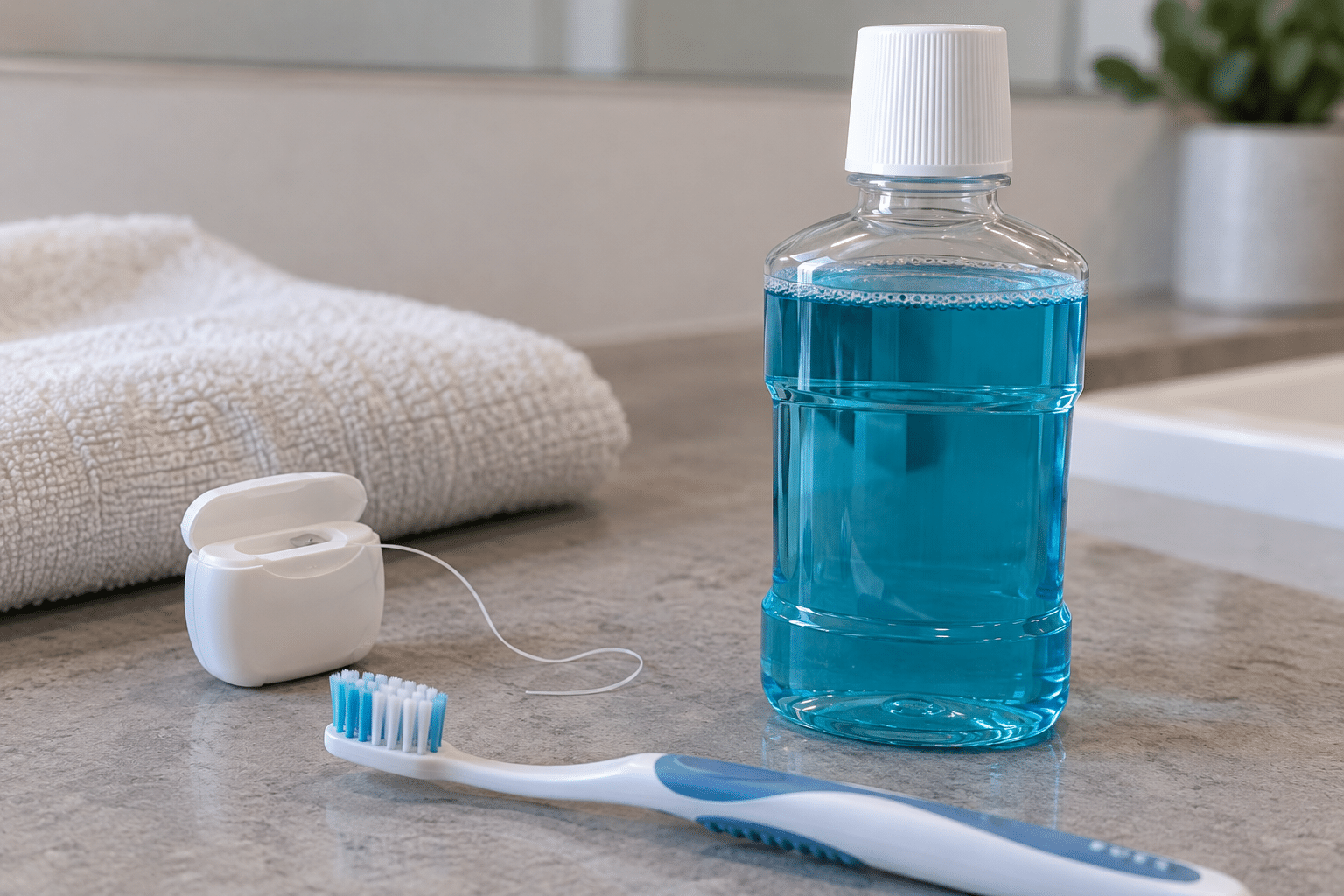
Lots of patients wonder which mouthwash is safe for their dental implants, but the answer depends on a few different things: where you are in the healing process, what ingredients are in the mouthwash, and what your dentist advises. This guide will help you find the best mouthwash for dental implants, starting from the day of surgery to years down the line.
Why You Need a Good Mouthwash for Your Dental Implants
Dental implants consist of a titanium or zirconia post that gets surgically placed into the jawbone, topped with an abutment and a crown. Just because the implant itself can’t decay like a natural tooth, it’s still dependent on healthy gum tissue and the surrounding bone. If those tissues get infected or start to deteriorate, peri-implantitis can develop, which can cause bone loss around the implant and implant failure.
Using the right mouthwash is just one part of keeping your dental implants and gums healthy. Some mouthwashes can irritate sensitive gums, while others can dry out your mouth, or even help control bacteria around the surgical site and support oral hygiene. But remember, a suitable mouthwash should be used to supplement regular brushing, flossing, interdental cleaning, and professional dental care, not replace it.
Key Mouthwash Ingredients: What to Look For and What to Avoid
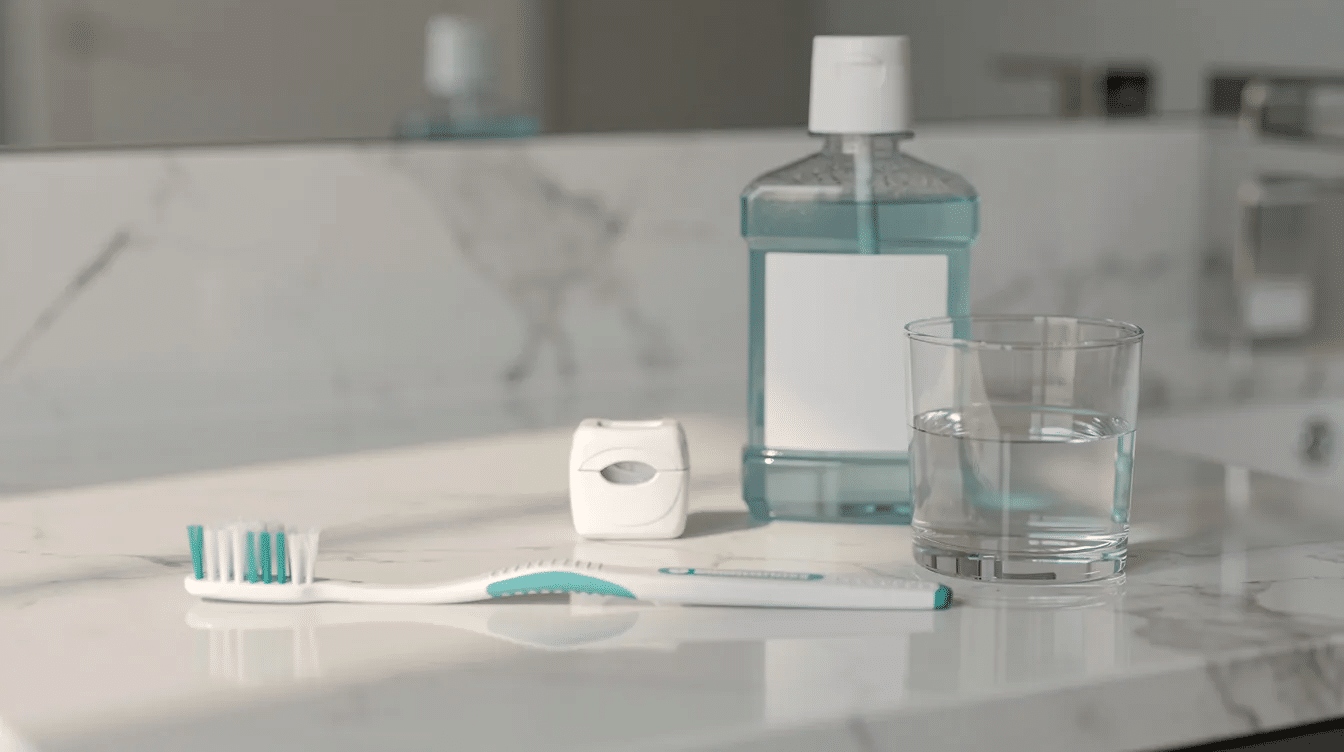
Reading the product label can help you choose a mouthwash with antibacterial properties that supports your oral hygiene routine.
Ingredients to consider:
- Cetylpyridinium chloride (CPC): An antimicrobial ingredient used in some mouthwashes to help control plaque buildup and oral bacteria.
- Fluoride: Helps strengthen natural tooth enamel and protect the teeth adjacent to dental implants against cavities.
- Xylitol and glycerin: Commonly included in oral-care products to support moisture and comfort.
- Aloe vera and chamomile: Included in some formulas for their soothing properties, although the benefits depend on the formulation and available evidence.
- Zinc compounds: Used in some mouthwashes to help control bad breath.
Chlorhexidine is another antimicrobial ingredient that dentists may prescribe after implant surgery or for specific oral health concerns. It should be used for the recommended period because prolonged use can cause side effects such as tooth staining and changes in taste.
Ingredients to use cautiously:
- High-alcohol-based rinses, particularly if you experience dry mouth or gum irritation.
- Strong essential oils or other ingredients that cause burning or discomfort.
- Any ingredient to which you have a known allergy or sensitivity.
Herbal or natural ingredients that are supposed to keep your breath fresh are not automatically safer or more effective than conventional alternatives. If you have sensitive gums, allergies, or other health concerns, ask your dentist which formula is appropriate.
Examples of Alcohol-Free Mouthwash Options
Not all mouthwashes out there have alcohol in them, but note that the ingredients and what they’re supposed to do vary from product to product. Here are a few examples, but don’t go thinking these are the only ones to consider:
- Crest Pro-Health: Some versions contain CPC to give plaque control a boost and fight off the bad stuff.
- ACT Total Care Alcohol Free: The ones that do contain fluoride are all about cavity prevention, so if you’ve got teeth near that implant, you might want to take a closer look.
- TheraBreath Fresh Breath: There are some options out there that are all about getting rid of bad breath, without any of the nasty stuff that will hurt your implant.
- Alcohol-free formulas with aloe vera, xylitol, or other moisturizers: These might be worth a shot if you’re really struggling with dry mouth or sensitivity.
Just remember to check the label, because even the same brand can have different stuff in different products.
And don’t even get started on prescription chlorhexidine mouthwashes- those are for when your dentist says it’s a go, and only as a last resort.
Best Mouthwash Types for Different Stages of Dental Implant Treatment
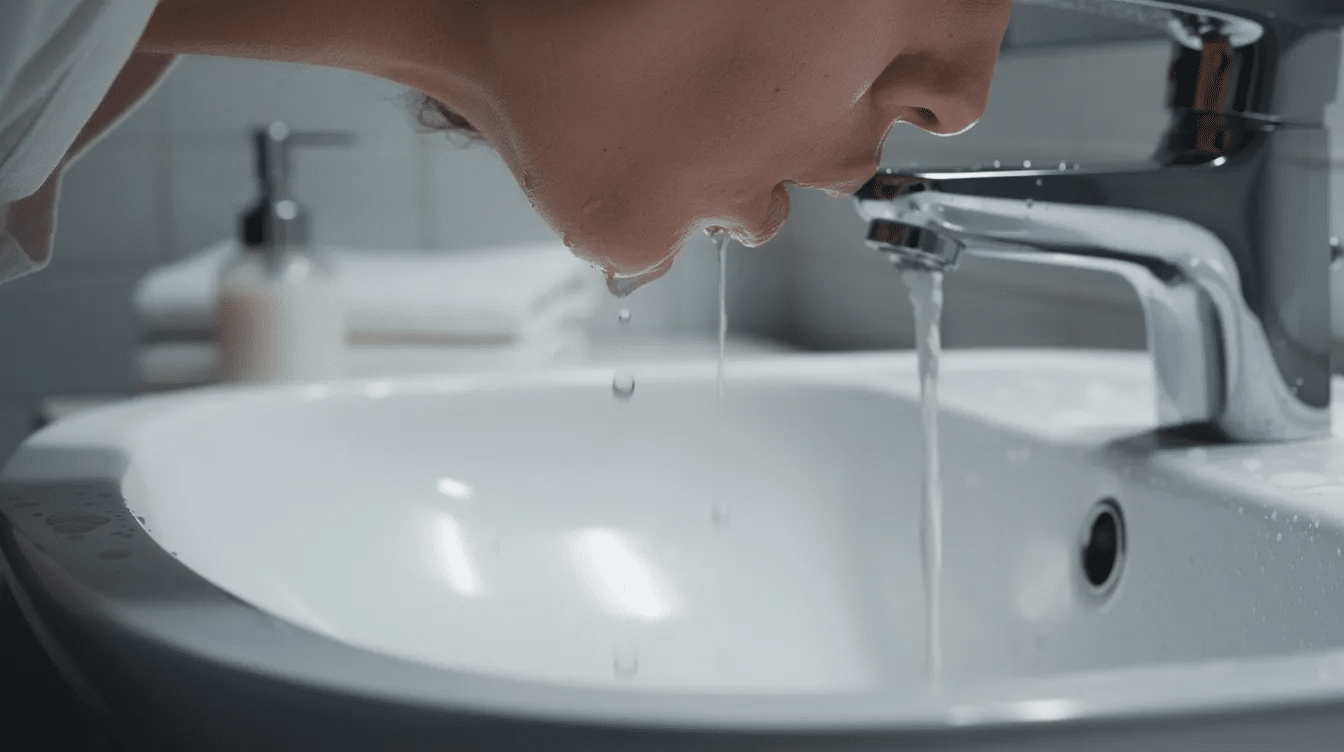
Your mouthwash needs may change as your implant heals and you transition to long-term maintenance.
Before surgery: Your dentist may recommend an antimicrobial mouthwash, such as chlorhexidine, to help reduce harmful bacteria before the dental implant procedure.
During the first 1–2 weeks: Follow your post-operative instructions regarding saltwater rinses and any prescribed antimicrobial mouthwash. Avoid introducing other products without your surgeon’s approval.
During the transition to routine oral hygiene: Once your dentist confirms that it is appropriate, you may begin using a gentle, alcohol-free mouthwash; this will help keep your gums healthy, and your dental implants too.
Long-term maintenance: Choose a mouthwash that supports your oral health goals, such as plaque control, cavity prevention, or relief from dry mouth. Consistent mechanical cleaning and professional monitoring remain essential to implant health.
How to Use Mouthwash Correctly with Dental Implants
You can’t just slap some mouthwash in and expect it to do the job, though. Here are some basic guidelines to go by:
- During early healing: Wait for your surgeon to give you the green light before using mouthwash, avoid aggressive rinsing, and don’t go crazy with the swishing or spitting
- When you’re just doing routine maintenance: Follow the instructions on the bottle; your dentist will provide specific aftercare instructions, so follow those to a T.
- After brushing and flossing: Just do what the product says, and some might even tell you to give your teeth a 30-minute break from food and drink.
- Clean around the implant every single day: Don’t forget to brush with a soft-bristled toothbrush and floss, and use the tools your dentist told you to use so you can keep your healthy smile.
If you start getting any nasty burning or irritation, stop using the product ASAP and get in touch with your dentist.
Dealing with Dry Mouth and Bad Breath When You Have Implants
Dry mouth is a real problem when you’ve got implants because saliva is key to keeping things running smoothly. Certain medications, smoking, and other things can mess with your saliva levels.
If you’re experiencing dry mouth, here are a few things you might want to try:
- Get an alcohol-free mouthwash that actually has some benefits for you.
- Drink a ton of water throughout the day.
- Consider chewing some sugar-free gum to get your saliva flowing (if that’s alright with your dentist, of course).
- And for goodness sake, stop smoking; it’s awful for your oral health and your implant.
And don’t just slap a stronger mouthwash on to cover up bad breath; that’s usually a sign of something more serious going on. Get in touch with your dentist to figure out what’s going on.
Regular checkups and cleanings are key for the long-term success of your healthy dental implants. Your dentist will give you a plan for how often to come back in based on your oral health and how your implant is doing.

When to Talk to Your Dentist About Your Dental Implant
If you notice any of the following, get on the phone to your dentist pronto:
- Bleeding that just won’t quit after the initial healing period is over.
- Swelling that gets worse after the first week.
- Pain that just gets worse and worse.
- Bad breath that just won’t go away and has got a nasty taste to it.
- Ongoing burning or irritation after using mouthwash.
Bring your mouthwash bottle to the appointment so your dentist can take a look at the ingredients and whatnot. If you’ve got diabetes, a history of gum disease, smoke a ton of tobacco, or have other factors that can mess with healing, you might need some special guidance.
Importance of Choosing The Right Mouthwash
The right mouthwash can help with proper oral hygiene around your implants, but it’s just one part of the long game. Choose a product that’s actually got your needs in mind, follow your surgeon’s instructions after the healing period is over, clean around the implant every single day, and get in for regular checkups. Doing all of these things will keep the surrounding tissue healthy and reduce the chances of implant problems down the line.
FAQ
Is chlorhexidine the best mouthwash after dental implant surgery?
Well, it depends. Chlorhexidine 0.12% is a powerful prescription antibacterial rinse that’s ideal for the first 1–2 weeks of healing, since it reduces plaque by up to 86%. You should avoid long-term use, though, as it could stain your teeth, alter your taste sensation, and, finally, disrupt the oral microbiome because of its antimicrobial properties; use it only if prescribed and follow your dentist’s professional guidance before you switch to an alcohol-free alternative.
Can the wrong mouthwash actually damage my dental implant?
Sure can; harsh, high-alcohol-based mouthwashes or overly strong antiseptic rinses can cause gum recession, dry mouth, and chronic irritation that could increase the risk of peri-implantitis. If you start experiencing a burning sensation or peeling, it’ll be better if you switch to a gentle alcohol-free option and consult your dentist.
Do I need a special mouthwash forever because I have dental implants?
Of course not; most patients won’t need a prescription mouthwash long-term. And everyday use requires an implant-friendly, alcohol-free product paired with proper brushing and flossing for proper implant care. Unless you have gum issues or dry mouth, you won’t require your dentist to adjust your routine.
Is Listerine safe with dental implants if I choose an alcohol-free version?
Certainly, Listerine formulas with no alcohol content are generally safer than high-alcohol-based products; however, essential oils can still irritate you if you have sensitive gums. But if it causes no burning or long-lasting irritation, then you should be ok, but always confirm with your dentist.
How long should I wait after using mouthwash before eating or drinking?
Wait for about 30 minutes after you use an antibacterial mouthwash so the active ingredients can reduce bacteria effectively. Rinsing with water or eating immediately washes away these protective compounds, and it won’t help keep your mouth clean.