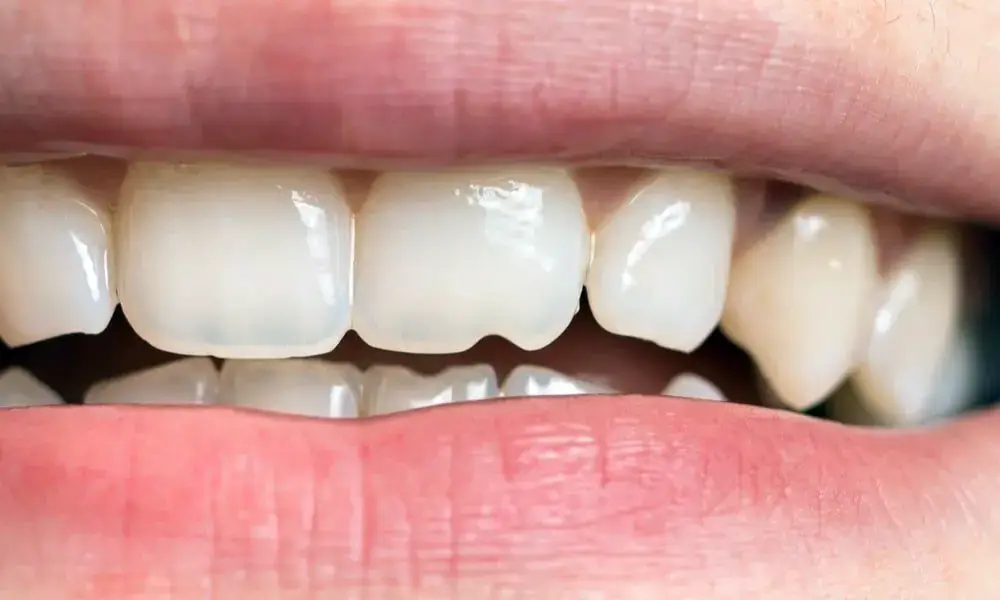
A sharp tooth cutting your tongue can turn even everyday activities into an exercise in pain. You might think to yourself, “just a tiny edge,” but trust us, your tongue isn’t going to let it go. A small chip is often a structural break in enamel, not just a rough surface, and it can get pretty irritating fast.
The good news is that there’s plenty you can do to protect that tongue until you can get to a dentist. First, rinse your mouth immediately with warm salt water made with warm water, then use dental wax and stick to soft foods. The key is knowing what will make things better, what will make things worse, and when the situation calls for some serious urgent care.
What To Do Right Now When a Sharp Tooth Is Cutting Your Tongue
Right now, if a sharp tooth is cutting your tongue:
- Focus on protecting the area and making the irritation more bearable until you can get to a dentist.
- Rinse out your mouth with some warm salt water
- If there’s a cut or bleeding, press clean gauze on the area for 10-15 minutes.
- Take a bit of dental wax and stick it over the sharp bit. If you can’t get hold of any wax, sugar-free gum can double as a quick fix, and topical gels may also provide temporary relief.
- Stick to soft foods as much as possible, and take over-the-counter pain relief as directed for temporary relief.
All these measures can help stop things from getting any worse, but they don’t actually do anything to sort out the underlying cause. A sharp tooth could have got that way thanks to a chip, crack, cavity or a dodgy filling, so you need to get yourself in to see a dentist ASAP.
What Not To Do When You’ve Got a Sharp Tooth Edge
If your tooth is cutting your tongue, don’t even think about trying to fix it yourself; avoid filing the tooth at home or slapping some household glue on it, as that’s just going to make things worse. Numbing gels might give you a bit of relief, but they won’t stop it from happening again or sort out the root cause.
You should also be careful with hard or crunchy foods if you think you’ve got a broken or chipped tooth, as it’s going to make things worse. If there’s swelling, hold ice or a cold compress against the outside of your face by the cheek for 15 minutes to help reduce it. And don’t just sit there, if you keep getting tongue cuts, it may heal up in a day or two, but repeated contact with a sharp edge will just keep making it a problem. Your dentist is the only one who can sort it out properly.
Why Does a Chipped or Broken Tooth All of a Sudden Feel Sharp?
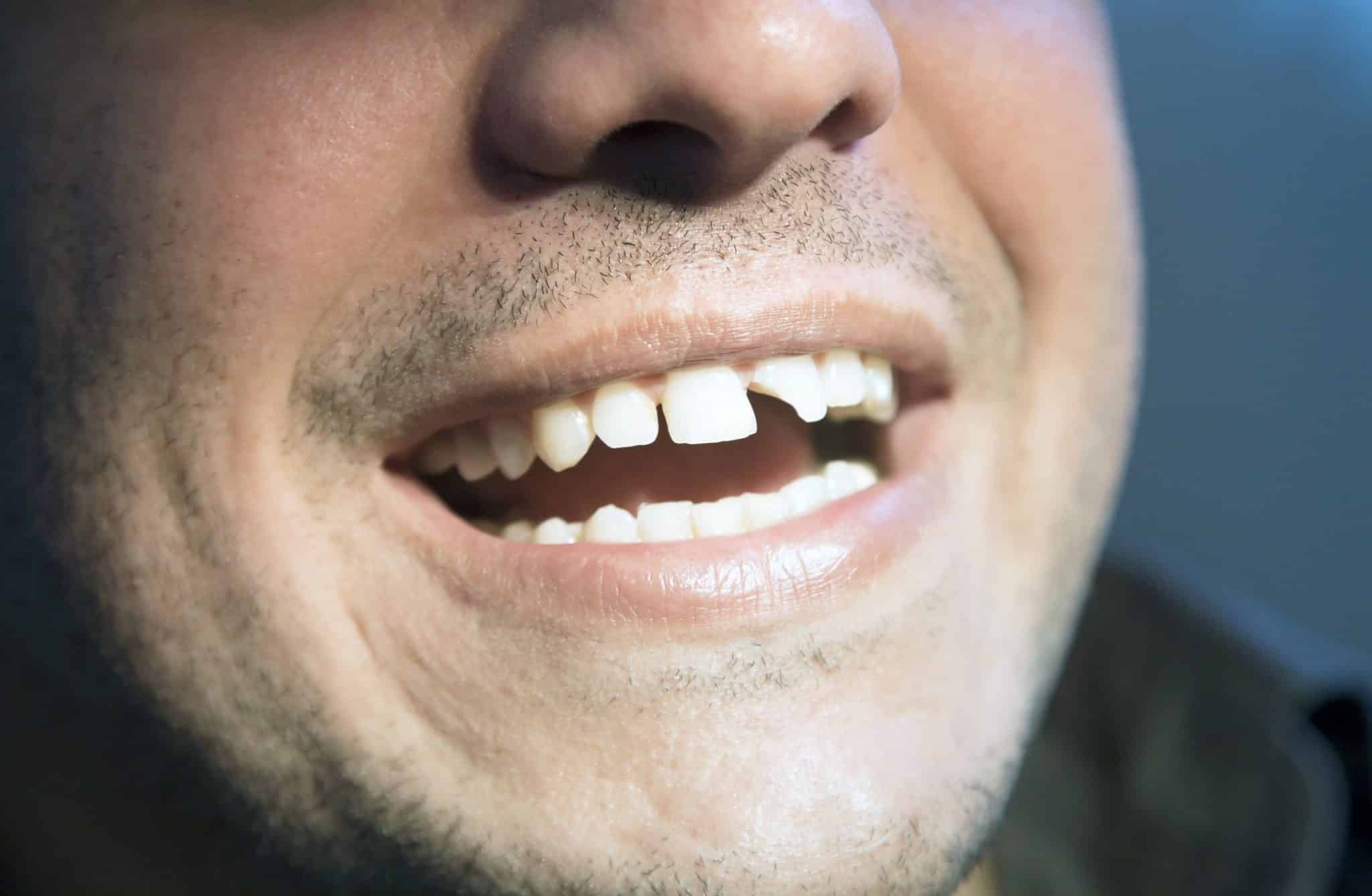
There are loads of reasons why a tooth can suddenly start feeling sharp. You might have chipped it, cracked it, or had an injury that fractured a tooth along irregular crystal lines, causing part of it to break, or maybe the crown or veneer has come loose, or untreated cavities have weakened the tooth enough to make it crumble. That’s why even a small chip or rough edge can feel way bigger than it is; the tongue is super sensitive and is always moving around in your mouth.
Sometimes the issue can pop up after a dental procedure if a filling needs a bit of polishing or a bite adjustment. While it might just be a little rough spot, it could also be a more serious problem like decay or a fracture, and a sharp edge is definitely worth getting checked out. If the problem persists, or you’re getting tongue cuts, it’s time to book a dental appointment.
Is It A Dental Emergency?
Not every sharp tooth needs emergency treatment. If it’s just a mild irritation and you can use wax to protect the area, you might be able to get away with waiting until your next dental appointment.
But if you’re in a lot of pain, your mouth is swelling up, there’s bleeding that won’t stop, a fever, pus, or you’ve got a bad taste in your mouth, it’s time to get to the dentist fast. If you’re finding it hard to breathe or swallow, or your swelling is getting worse, get to the hospital right away; that’s a dental emergency.
Even if your symptoms don’t seem too bad, getting in to see a dentist as soon as you can is still a good idea. A sharp tooth might need just a bit of smoothing, but it could need bonding, filling, or a crown, depending on the cause.
How To Protect That Tongue With Dental Wax Until You See A Dentist
Until you can get to the dentist, focus on protecting your tongue and keeping the irritation under control. Dental wax is a great quick fix as it’ll create a soft barrier over the sharp edge. A small piece can also cover sharp edges to protect your tongue from more cuts. Get a bit of wax, stick it onto the tooth, and then replace it as needed. If you can’t get hold of wax, the orthodontic wax from a pharmacy will do the trick just as well, and sugar-free gum can work in a pinch.
For the time being, go for soft foods like yoghurt, soups, smoothies, eggs, mashed potatoes, pasta and rice. Avoid anything hard, crunchy, spicy or very hot that’s going to irritate the tongue even more, as sugary drinks and sticky snacks can also feed bacteria. Brush around the area gently, floss if you can, and rinse with warm salt water to wash away food particles, keep the area clean, and help prevent infection while you wait for care. Staying hydrated will also make the whole area feel better.
How Long Can You Wait
A sharp tooth that keeps cutting your tongue should not be ignored. Repeated irritation can be painful and may lead to persistent sores or ulcers if left untreated. While a minor rough edge without severe symptoms may be manageable for a short time, it’s still important to schedule a dental evaluation as soon as possible.
The underlying cause could be something simple, such as a rough spot that needs polishing, or it could require treatment like composite bonding, a filling, or repair of a crack or cavity. Identifying the problem early can help prevent further damage, infection, worsening tongue irritation, and potential tooth loss. In many cases, early treatment is also simpler, more predictable, and less expensive than waiting for the problem to progress.
How a Dentist Can Fix That Sharp Tooth in Your Tongue With a Dental Filling
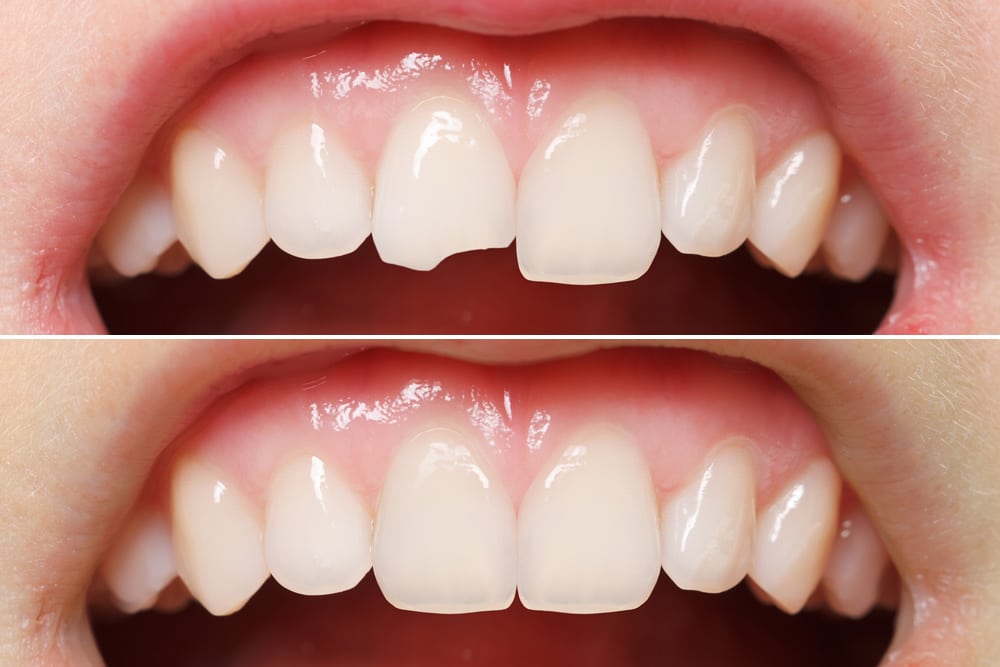
The treatment for a sharp tooth depends on the underlying cause. A dentist will examine the tooth, your bite, and the irritated area of the tongue, and may take X-rays to check for more serious damage.
For minor issues, smoothing or polishing the rough edge may be enough to stop the irritation. Small chips can often be repaired with composite bonding or a filling, using tooth-colored material to restore the tooth’s shape and smooth surface while preserving as much natural tooth structure as possible.
More significant damage may require a filling replacement, dental crown, or veneer. Crowns are commonly used to protect and restore heavily damaged teeth, while veneers are often used on front teeth for cosmetic repair. If decay or trauma has reached the tooth’s nerve, root canal therapy may be needed before the tooth can be restored. In cases where the tooth cannot be saved, extraction may be necessary, followed by replacement options such as a dental implant or bridge. The goal is always to choose the treatment that best addresses the problem while protecting the long-term health and function of the tooth.
How Much is it Going to Cost to Fix That Sharp Tooth?
The cost of repairing a sharp tooth depends on the underlying cause and the treatment required. A minor rough edge may only need smoothing or polishing, while a chipped tooth could require composite bonding. More extensive damage, such as a broken filling, cracked tooth, or infection, may call for a filling replacement, crown, or root canal.
Because the cause is not always obvious, a dental exam or virtual diagnostic can help determine the most appropriate treatment and provide a clearer estimate of costs. For patients paying out of pocket, comparing treatment options may be worthwhile. Many people from the U.S. and Canada explore dental care in Los Algodones as a way to access quality treatment while potentially reducing overall dental expenses.
Planning a Treatment at Dental del Rio in Los Algodones
If your sharp tooth is causing you some real pain or discomfort, don’t wait around for travel plans; go get it seen to as soon as you can by a dentist or doctor near you.
But if your case is stable and you’re just planning on getting it fixed up, then we can help you figure out your options before you even get here. We’ve got a free virtual diagnostic that can be super helpful if you want to know whether the tooth just needs smoothing, bonding, a filling, a crown, or something else.
Our clinic is family-owned and operated, we’ve got state-of-the-art equipment and materials, and we make sure you’ve got a clear understanding of what’s going on every step of the way. We’ve also got shuttle support, accommodation guidance, and all sorts of other help to make your visit as smooth as possible.
Los Algodones is a great place to visit, too. Lots of our patients take a little stroll through the markets, try some of the local food, and get a glimpse of what life is like in a small Mexican town.
When to Get Help and What to Ask Your Dentist
If your tooth is still cutting your tongue, causing discomfort, or appears damaged, it should be evaluated by a dentist. Even a small sharp edge can be a sign of a chipped tooth, crack, broken filling, or decay that requires treatment.
During your appointment, ask what is causing the sharp edge and whether the tooth can be repaired with simple smoothing, composite bonding, a filling, or if a crown or another treatment may be necessary. It is also helpful to ask whether there are signs of infection, nerve involvement, or structural damage that could affect the long-term health of the tooth.