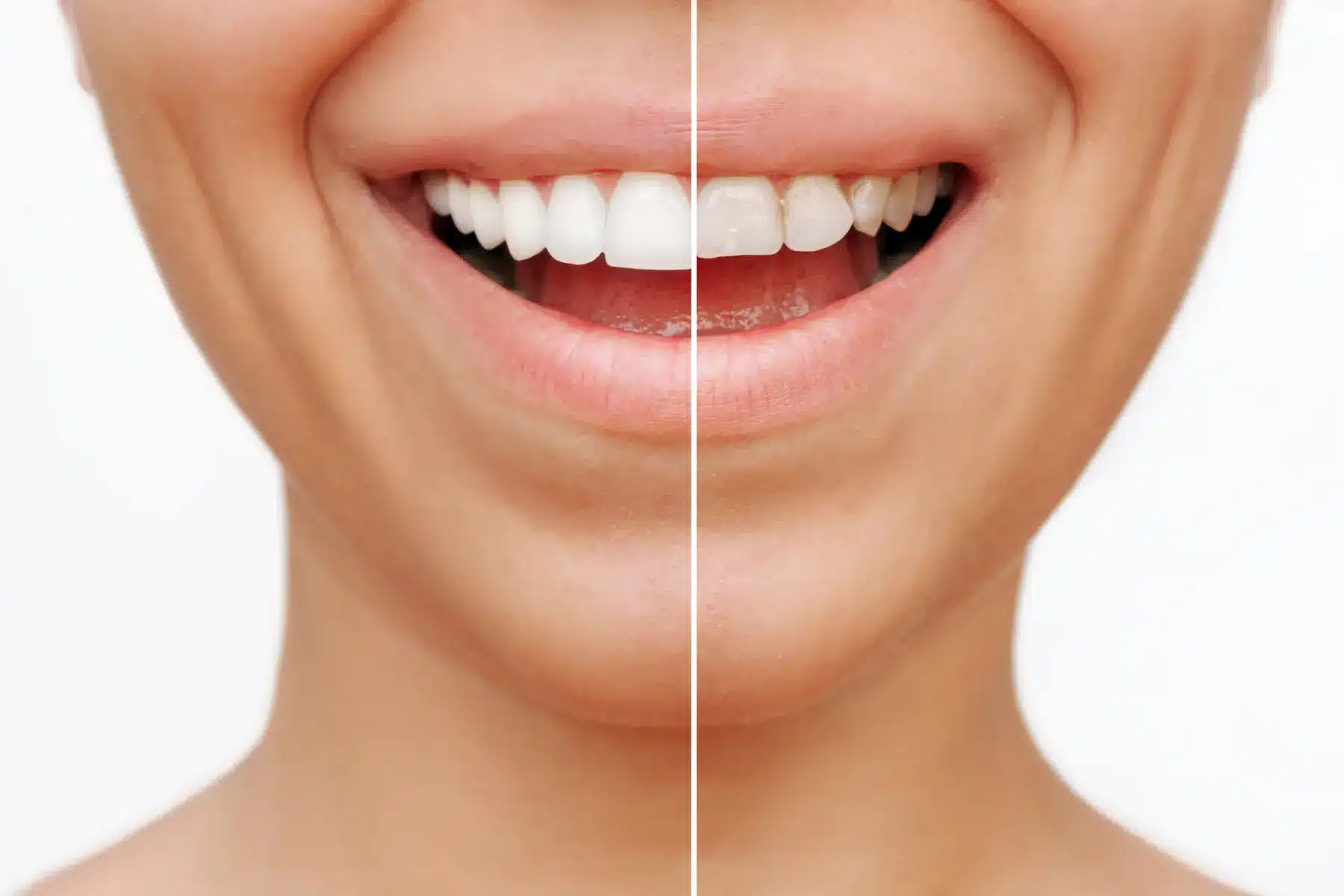
Veneers are a great way to spruce up your remaining teeth, but they don’t do much good if you’ve got gaps where natural teeth used to be. The thing is, veneers need a solid surface to stick to, so if a tooth is completely gone, they can’t just magic one up out of thin air. To get veneers to work, you’ve first got to replace the missing tooth, usually with an implant, a bridge, or a partial denture. Once the artificial teeth foundation is in place, you can use veneers to give your remaining teeth a nice, uniform look.
| What you’re seeing | What it usually means | Veneers alone? |
| An open space where a tooth should be | A tooth is fully missing | No |
| Teeth are there, but gaps or “black triangles” show | Shape and spacing issue | Maybe |
| Several spaces or your bite feels off | Function and alignment issue | Not yet |
3 scenarios where alternative cosmetic dentistry options other than dental veneers would be the best call.
There’s a gap where existing teeth used to be
If there’s a genuine hole where a tooth used to be, veneers just won’t cut it on their own. Veneers need a solid surface to stick to, and if there’s nothing there, well, you can’t just “float” a veneer in mid-air.
So the first step is to get a tooth-replacement option sorted, and then maybe later down the line, veneers can come in to blend the shades and shapes of your remaining teeth, making them all look nice and uniform.
Teeth are there, but there’s just some weird spacing
Sometimes, the problem isn’t missing teeth; it’s just that your natural teeth are spaced out a bit unevenly. In that case, veneers can be a good option; they can help reshape your teeth to close up the gaps, giving you a more even look.
But this is a case-by-case thing; your dentist needs to look at the state of your gums and the forces that are going on in your mouth to make sure it’s going to work out okay.
There are multiple missing teeth, or there’s a major bite problem
When one or more teeth are missing, things get really complicated. Chewing forces start to shift around, and teeth start to drift out of position.
Placing veneers on a mouth that’s not stable is just asking for trouble; chipping, staining, and an uneven look are all real possibilities. So usually you’ve got to get the function sorted out first, and then worry about aesthetics.
You need to address missing teeth first before veneers are even an option
Oral health basics: gums, cavities, and bite
Gums are pretty important when it comes to veneers; they set the shape and the look of the final product. If your gums are in a bad way, it can make it hard to keep them clean and can make the margins look crappy in photos, because gum health makes or breaks a veneer look.
And then there’s bite, if your front teeth are taking a beating every time you bite down, you might need to get some different design or a night guard to protect them, because bite forces can be the death of a veneer.
Veneer types: porcelain vs composite
Both options are perfect to fix uneven teeth, but let’s go over the differences between them.
Porcelain veneers are the high-end choice; they’re custom-made in a lab and then bonded to the tooth. They’ve got a super natural look and are really resistant to staining, but they do require some enamel to be taken off the tooth.
Composite veneers are a more straightforward option; they’re built directly on the tooth using resin. They’re a bit easier to repair and might be a good choice if you’re looking to keep more of your natural tooth intact, but they tend to show more wear and tear over time.
The “do first” solutions for missing teeth (your foundation)
When you’ve got missing teeth, foundation is key. If you’re planning on getting veneers eventually, the way you replace that gap will set the stage for your results, your timeline, and your budget.
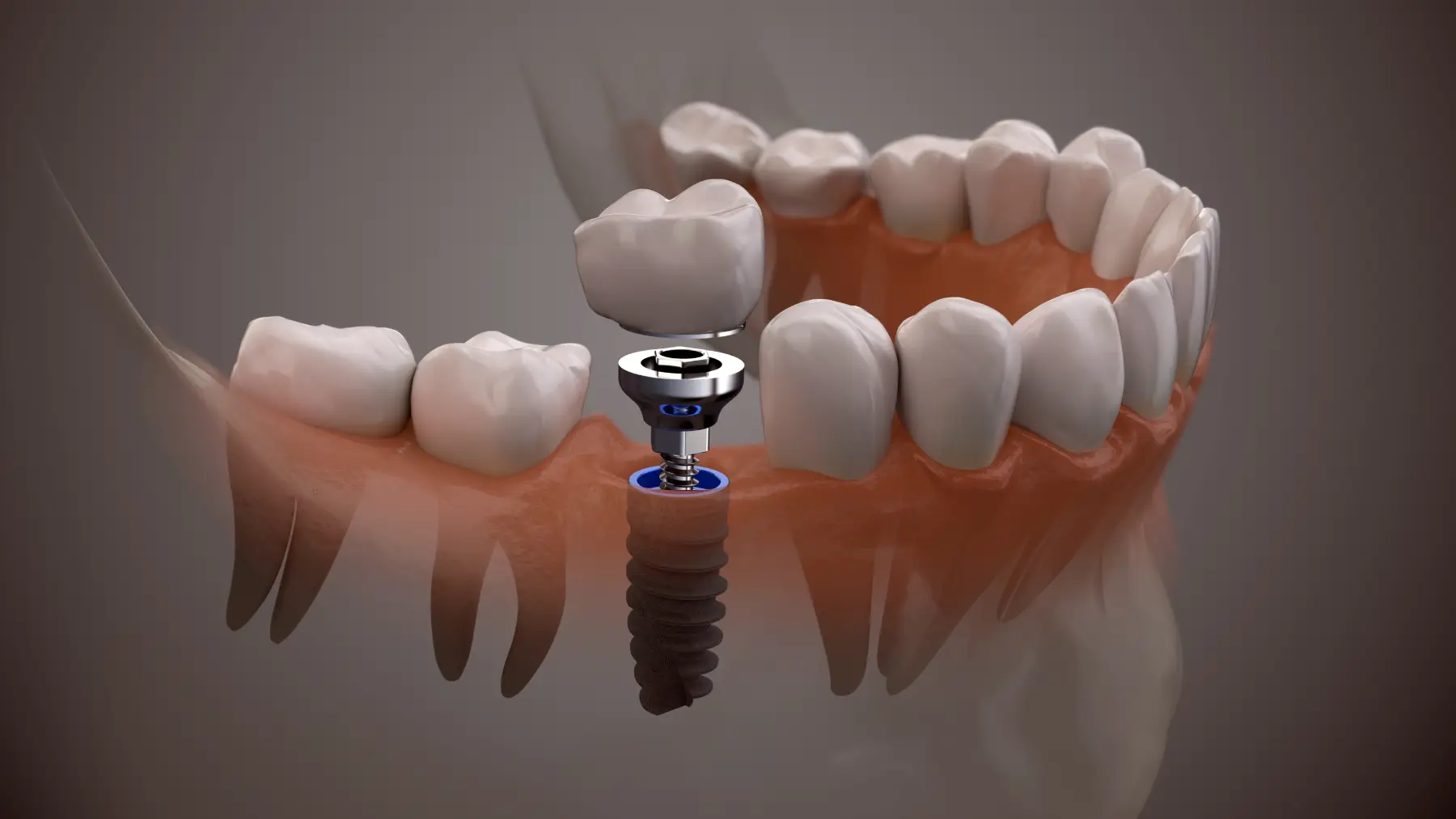
- Dental implant + crown: If you’ve got enough bone and gum health to make it work, a dental implant is a great choice; to address missing teeth, it replaces the root and the visible tooth without messing with your neighbors.
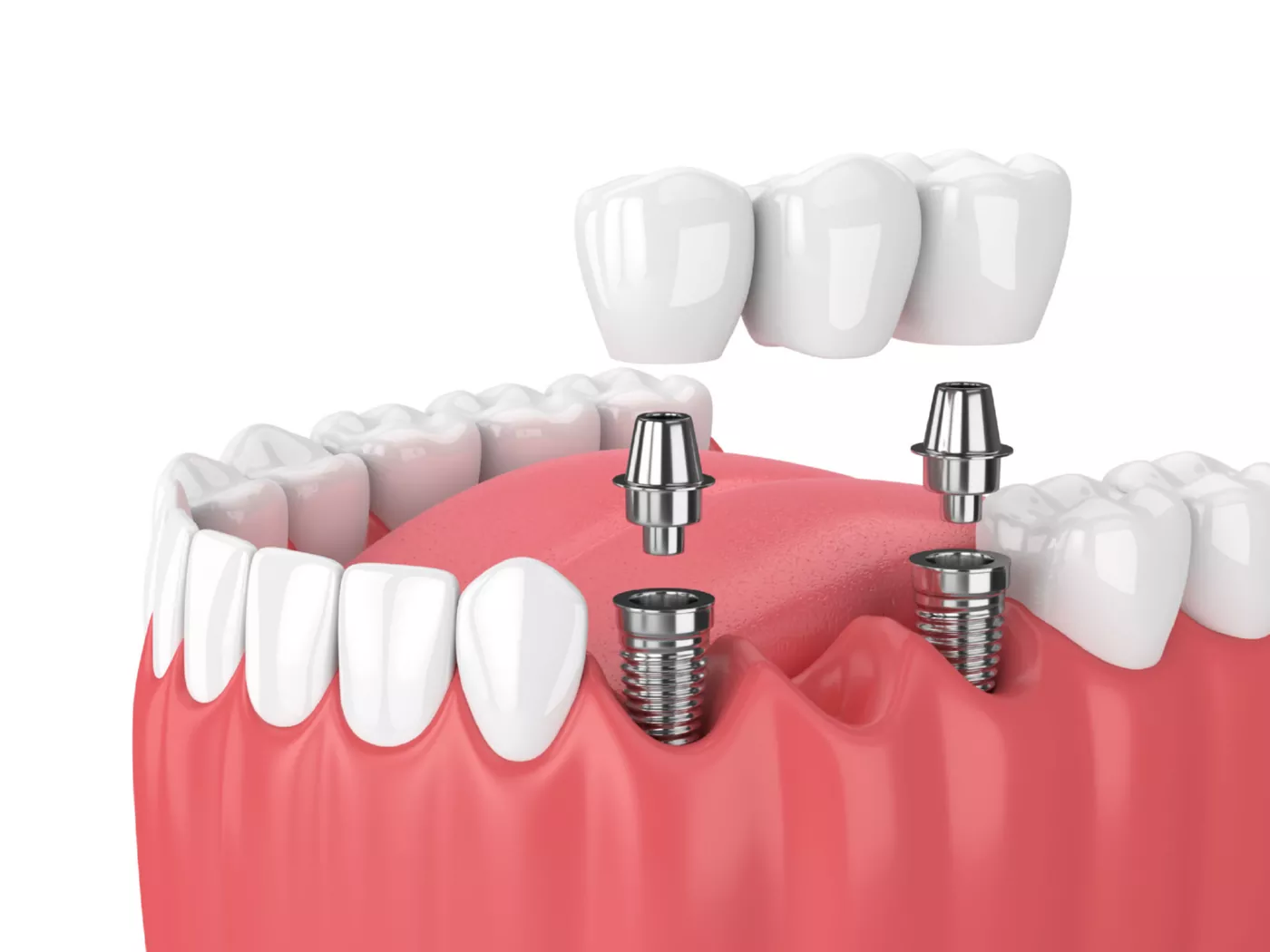
- Dental bridge: A bridge uses the teeth next to the gap for support, creating a fixed replacement that’s strong and reliable. It’s a good option if the teeth on either side need crowns anyway, or if dental implants aren’t an option.
- Partial denture: This is a more flexible option that can replace one or several teeth. It’s good for budgeting or timing, and can be a temporary solution before switching to something more permanent.
Combining Veneers with teeth replacement options (making it all work)
So if you’re wondering, “Can you get veneers with missing teeth?”, think of veneers as the finishing touch. The first step is to fill the gap, so you need to replace missing teeth first, then dental veneers come in to just give your remaining teeth a bit of TLC, so they all look nice and consistent in photos and in real life.
Dental Implant + veneers on existing teeth
A dental implant crown will replace the missing tooth, and then dental veneers can come in to match the shades and shapes of your remaining surrounding teeth, so everything looks nice and harmonious.
Dental Bridges + veneers (for a uniform look)
A bridge does the fix on the teeth next to the gap, and then veneers can come in to smooth out the rest of your teeth, so it all looks super even and natural.
Treatment Timeline (The Lowdown on What to Expect, Especially When You’re Traveling)
Typical Visits and How We Sequence Them
Lots of veneer cases end up being a two-visit affair: one for planning and prepping, and another to stick the final dental veneers on once they’re good and ready. You’ll probably have temporaries in the meantime.
Implants, on the other hand, need time to heal, but that’s going to vary depending on the specifics of your case. Your dentist will give you a call on what’s going to happen next after they’ve done some imaging and a quick exam.
Planning If You’re Coming from the States or Canada
Don’t leave everything to the last minute; do a bit of prep work so you’re not deciding everything in the dentist’s chair. Ask your dentist to spell things out in writing before you book that flight.
- Send over any recent X-rays, photos, and dental records you might have lying around.
- Ask for a written rundown of what’s going to happen when you get there: what gets done first, what gets done later, and why.
- Get confirmation on how many visits you’re likely to need and what happens if you need follow-up treatment back home.
Dental del Rio does a Free Virtual Diagnostic, so you can send over your records and questions before you travel, and get an idea of what you’re looking at before you arrive. Decisions are still made in person. It’s always best to check out the situation for yourself and get a proper diagnosis from a professional.
The Cost Reality Check (Why Los Algodones is a Different Story)
When you’ve got missing teeth, the foundation, i.e., the implant, bridge, or partial denture, is what drives up the cost. Dental Veneers are usually priced per tooth on top of that.
Dental del Rio prices porcelain veneers at $350 per tooth, and says that lots of patients end up saving compared to what they’d pay in the States or Canada. Your final quote will depend on how many teeth are involved and what needs replacing first.
Travel-wise, patients often compare Los Algodones and Cancun. Cancun can be a great spot for a resort trip, but flights and longer stays can add up, whereas Los Algodones is all about short visits near the border.
Why Patients Choose Dental del Rio for Dental Veneers to get their dream smile
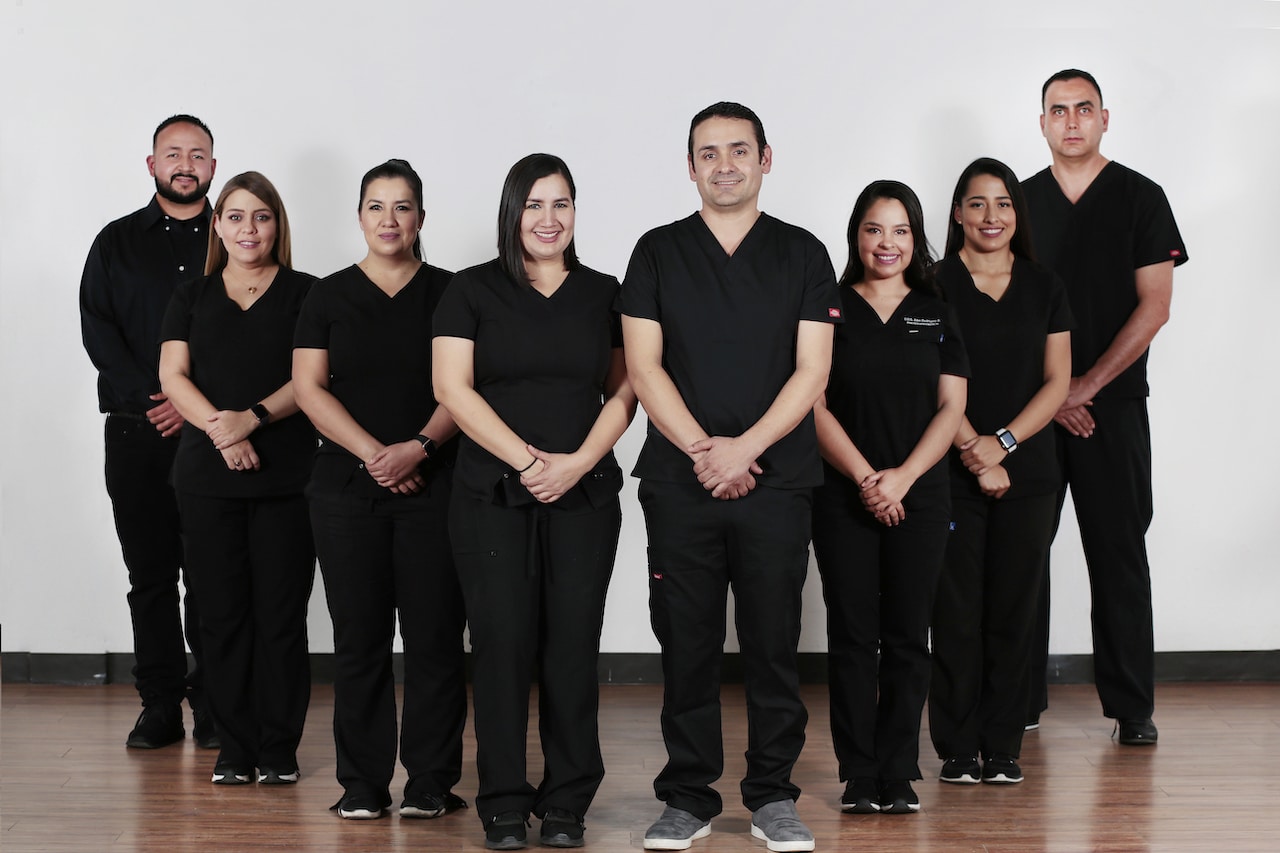
When you’re combining tooth replacement with dental veneers, you want to make sure that everything is sequenced properly and that you’re using the same materials throughout. Dental del Rio highlights their bilingual support and planning help.
DDR uses state-of-the-art technology like CT-Scans, CAD/CAM, 3D intraoral scanner, an in-house dental lab, and so on, plus logistics help like arranging for a meet-up on the border, shuttle options, and lodging discounts for veneer patients.
DDR is run by Dr. José Manuel Jimenez Mendoza, who is a professionally qualified cosmetic dentist with education in the field and continuing education in evidence-based implant dentistry at Harvard School of Dental Medicine.
FAQ
Can you use veneers for missing teeth?
Not directly. A missing tooth usually needs an implant crown or a bridge first, and dental veneers can be used afterward to match neighboring teeth, because a missing tooth needs a replacement.
Can veneers close the space from a missing tooth?
Dental veneers can close small gaps between teeth that are still present. If there is an open space because a tooth is gone, you typically need a replacement option first, because veneers do not replace tooth structure.
What’s better if I want veneers later: an implant or a bridge?
It depends on your bite, your bone and gum health, and what the adjacent teeth need. Your dentist can explain the tradeoffs and what fits your timeline, because the best choice is case-specific.
Do veneers and implant crowns match?
They can, when they are planned together. Shade and shape are selected as a set so the implant crown does not stand out next to veneers, because shade planning is a system.
Get Your Free Quote
If you’re looking for a plan that replaces missing teeth first and then refines your visible teeth with veneers, get an evaluation. Request a Free Virtual Diagnostic or ask for a quote, so you can see your likely sequence and estimated costs in writing, because a written plan puts an end to all that guessing.