

A toothache can send you into a panic in minutes. One minute you’re thinking, “Might be just sensitive,” and the next you’re frantically Googling “signs I need a tooth extraction” at 2 a.m.
Here’s the honest truth: the only way to confirm whether a tooth should be removed is with a good old-fashioned exam and some X-rays. At Dental del Rio in Los Algodones, Dr. Alejandro Barragan, DDS, takes a cautious approach, using imaging and informed consent to recommend the best next step for your oral health, not the quickest.
Your tooth hurts, but it doesn’t necessarily mean that you need a dental extraction.
Many painful teeth can still be saved with a filling, crown, or root canal treatment, and maintaining good oral hygiene can help prevent tooth decay and gum disease, which are common causes of tooth loss. Extraction is usually recommended when natural teeth are beyond saving, or when keeping them will just lead to ongoing infection.
In simple terms, “beyond repair” often means there’s not enough healthy tooth left to work with, the crack runs too deep, or infection and bone loss have taken a toll. Your dentist weighs all that up before deciding to recommend removal.
The 10 dental issues that will have your dentist concerned
If you’re trying to decide whether you might need a tooth extraction, use this list as a guide for when to get help. It’s not a diagnosis, just some things to bear in mind that might suggest you need to see a dentist and not delay seeking care.
1. Tooth pain that’s getting worse and won’t subside
Experiencing severe tooth pain that’s just getting worse, waking you up, or coming on when you bite can mean there’s significant decay, inflammation, or infection at play. Pain alone isn’t a guarantee you need a tooth extraction, but it’s certainly a good reason to get tested and do some X-rays to rule out further complications.
2. There’s so much decay that your tooth can’t be rebuilt (When a tooth is beyond repair)
Tooth extraction is often necessary due to severe tooth decay, infection, gum disease, or trauma that cannot be repaired with other treatments. When decay has eaten away too much tooth structure, there just isn’t enough left to hold a filling or crown. People often describe this as “it keeps breaking.” X-rays help figure out how far the decay has gone. Severe tooth pain that does not go away can indicate that a tooth’s nerve is beyond repair, necessitating extraction.
3. You’ve got swelling, pus, or a gum ‘pimple’ near the tooth
A small gum bump that drains or swelling near the tooth can signal an abscess, a build-up of infection in a pocket. It may clear up briefly, which can be confusing, so imaging helps track down the source tooth and check on surrounding teeth and bone involvement. Persistent infections or abscesses may require extraction to prevent bacterial spread.
4. Gum disease makes your tooth feel loose or shift when you bite
A loose tooth in an adult is usually a sign that the support around it is compromised. Gum disease and trauma can weaken the bone and ligament that hold teeth in place and may also affect the structure of the neighboring teeth, so your dentist will check gum health and bone levels on the X-rays.
5. You have Broken Teeth that are cracked or split below the gum line
Small chips are no big deal and often easy to fix. But a crack that runs down towards the root is a different story, and one that’s hidden below the gumline can be tricky to seal and protect.
6. You’ve got a fever or swelling in your face that’s spreading
Fever, swelling that’s spreading, or trouble opening your mouth can be a sign of an infection that needs some urgent care. It might not end in the extraction of a damaged tooth, but it should be looked at pretty quickly to reduce the risk.
7. Your fillings, crowns, or root canal just aren’t holding up
If you’re getting repeat problems on the same tooth, repairs just stop being reliable. Your dentist will check if there’s still enough healthy tooth left to rebuild, or whether taking it out is the safer option.
8. You keep getting a bad taste or bad breath
A bad taste in the mouth can be caused by loads of things, but if it keeps coming back, it might be a sign of decay, a leaking filling, or infection of the surrounding tissues. Get an exam and X-rays to track down the source.
9. Impacted Wisdom teeth problems
Back-of-the-mouth swelling, tenderness, or repeated gum infections around a wisdom tooth can happen when the tooth is hard to clean. In cases where the tooth is impacted or severely damaged, the dentist may need to make small incisions in the gum tissue or use additional tools to aid in the extraction process.
10. You need a tooth extraction procedure before getting braces (it depends on the case)
In some cases, extractions are used to make space for orthodontic treatment. This is a case-by-case decision based on bite, facial balance, and treatment goals, not just a straightforward rule.
If any of these sound like you, stop worrying. The next step isn’t automatically “pull it”; it’s a thorough exam, clear options, and a plan you understand.
Simple vs surgical extraction, what your dentist decides
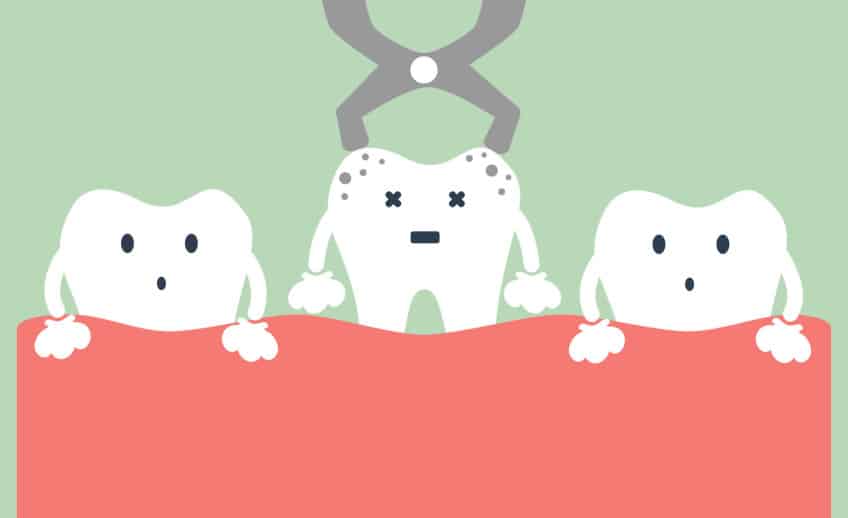
Simple extractions are performed on fully erupted teeth that can be removed with minimal effort. A surgical extraction might be needed if the tooth is broken below the gumline, impacted, or tricky to reach.
Before any decision is made regarding your oral health, you should get a clear explanation of what the imaging shows, how you’ll be numbed, and what recovery will be like.
What to expect after the extraction process, and aftercare basics
After the extraction, patients will receive post-extraction instructions to help control bleeding and promote clot formation. For most people, the pressure they feel after an extraction isn’t a sharp pain because the anaesthetised area numbs it out. Depending on the type of extraction, you may have stitches, and you should follow some specific home care instructions.
Pain management is an important aspect of post-extraction care, and patients may be prescribed pain relievers or advised to use over-the-counter medications. The rest of the aftercare basically revolves around protecting the blood clot that forms in the socket. Just follow the instructions on what foods to eat, how to gently rinse, and avoid straws and smoking. And if you have a fever, pus, heavy bleeding, or severe pain that suddenly gets a lot worse after a couple of days, call your dentist straight away.
After you’ve had an extraction, what do you do next?
Not every extraction needs to be done and dusted and followed up immediately with a new tooth. But loads of them do. Having a new tooth put in helps keep your bite in balance and stops the other teeth from shifting around over time.
Dr.Barragan will run through some options with you: a dental implant, a bridge, or a partial denture. And the timing all depends on your case and whether or not there is an infection. So don’t go thinking you’ve got to sort it all out right away.
Why Los Algodones for extractions (and how it compares to Cancun)
Mexico’s got two main hubs for dental tourism, Los Algodones and Cancun. Cancun can be a great destination if you are planning a holiday, but it usually means you’ve got to add on more travel time around getting to the dental visit.
Los Algodones is the ideal choice for short, efficient trips; loads of patients from the US and Canada come here for extractions and follow-up care. The border crossing and the town layout all make it easier to schedule things.
Getting started with DDR (low-friction next steps)
If you think you might need a tooth extraction, then you can start before you even get down south. DDR offers a Free Virtual Diagnostic, so you can send them some recent X-rays or photos, tell them what your symptoms are, and you’ll get an idea of what they think the next steps might be.
The care is all led by Dr. Alejandro Barragan, DDS, who has 20+ years of experience. He’s got a team of bilingual staff to sort out any logistical or travel plans, and he’d be happy to give you a written breakdown of what’s included and discuss their warranty policy with you.
Get a Free Quote
If your tooth pain is getting out of control, or you’re getting some swelling, or you just feel like something is unstable, don’t wait to see how things go. Get a Free Quote and see what a consultation, some imaging, and an extraction plan could look like for you.
If you want to explore some alternatives, you can get a quote, see the prices, or just ask about traveling to see us.