
If you’re Googling “types of dentures,” chances are you’re trying to figure out how to get back to doing the everyday things that bring you joy, without the stress of dealing with missing teeth. Eating, speaking, and smiling like nothing’s wrong is a big deal, and the right type of denture should be making your life and oral health easier, not harder.
At Dental del Rio (DDR) in Los Algodones, countless patients from the States and Canada come in seeking help with dentures because the town’s an ideal spot for dental travel, and our clinic offers bilingual support, plus a free virtual diagnostic to give you an idea of what to expect before you even book a trip. However, at the end of the day, a final recommendation will still need a face-to-face consultation with our dentist.
A complete guide for the different types of dentures in plain English
Dentures are essentially custom replacement teeth. Some replace a whole upper or lower jaw arch, which is why dentures are custom-made artificial teeth. Full ones replace a whole arch, partial dentures fill gaps between healthy teeth, and function is key. Choosing the right one depends on how many teeth you’re missing and whether you care more about stability or cost. Then there’s timing: want them right away or a few weeks after extractions? And stability: traditional removable dentures or ones that lock onto dental implants for extra security? Your dentist will need a close look at your gums, bone health, and how your teeth fit together to come up with a plan.
Getting a handle on the different types of dentures
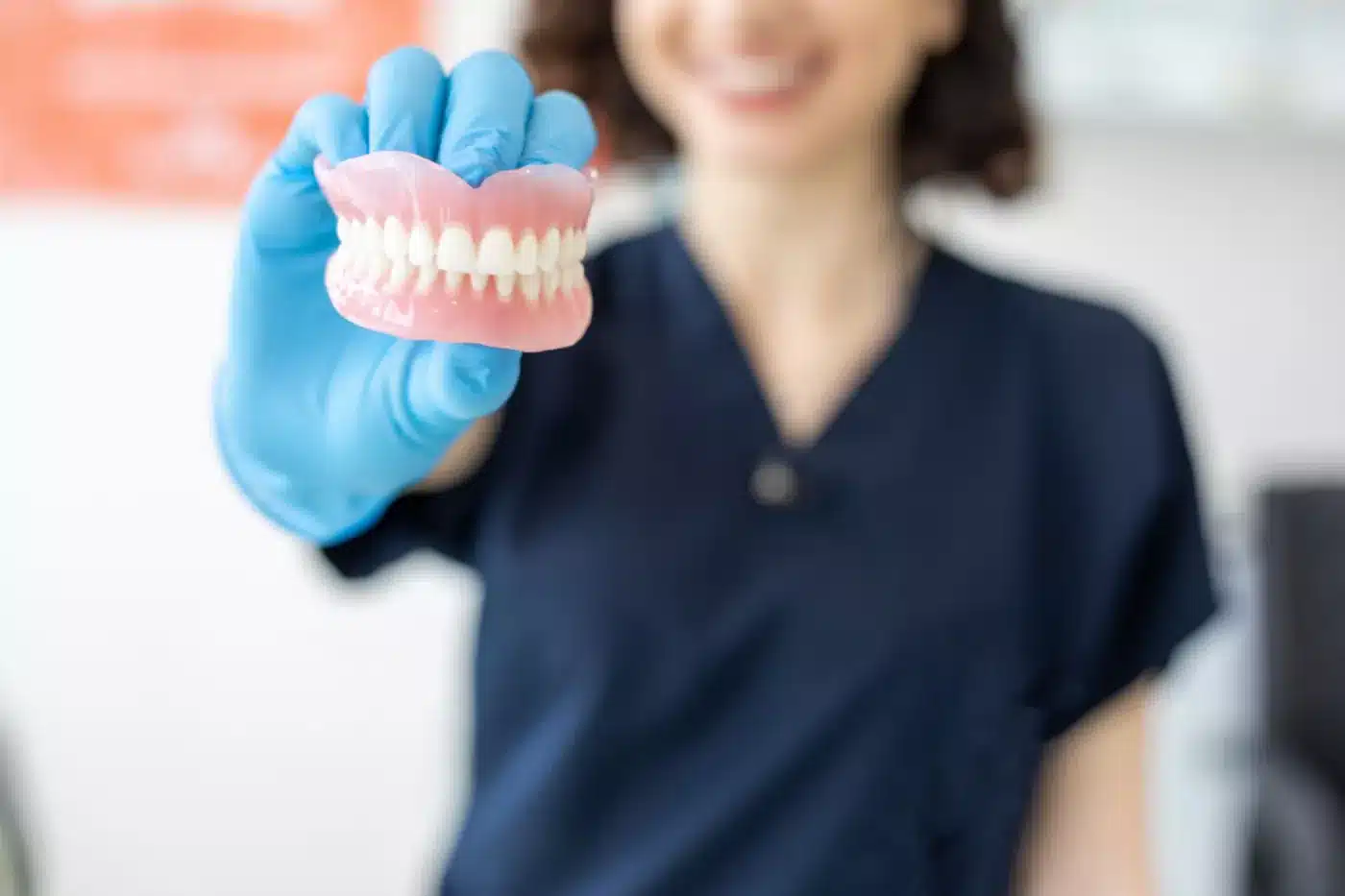
This is a good starting point, because a clear plan makes all the difference. These are the main categories to get your head around:
- Full (complete) dentures: removable teeth for an entire arch; upper ones tend to be more secure than lower ones.
- Partial dentures: removable teeth that use your remaining teeth for support; the design has to be careful not to put too much strain on those natural teeth.
- Immediate dentures: These are fitted on the same day as extractions, but you’ll need a few adjustments while the tissues heal.
- Implant-supported dentures: these are removable, but they snap onto dental implants for extra stability.
- Implant-supported fixed options: these are fixed in place and need to be removed by your dentist; the downside is that you’ll need to follow a different cleaning routine.
How to quickly narrow down the type of dentures you may need
1) How many teeth are you losing?
If you’ve lost most or all of your natural teeth in an arch, you’re probably looking at either full dentures or implant-based options to get your teeth back. If you’ve still got a few strong natural teeth, a partial might be the way to go; it preserves what you’ve got while filling in the gaps.
If you need extractions, that’s usually a staged process: a temporary solution first, then a more permanent one after you’ve healed. That’s normal, and it helps avoid making promises you can’t keep about a “final” fit.
2) How stable do you need it to feel daily?
Traditional removable dentures can still feel a bit loose, especially on the bottom arch. Some people are happy to make do with some adhesive, while others prefer something that feels more “locked in”. If you’re in the latter camp, an implant-retained denture might be a step up, and still removable for cleaning. If you really want teeth that don’t budge, you might want to look at implant-supported fixed options. Just be aware it’s a more involved process, and you’ll need to stick to a different hygiene routine.
A reality check on what makes a denture “best.”
The “best” denture is the one that you can actually deal with day in and day out. Dentures improve facial appearance and restore a youthful look, and that depends on a whole range of things: your bite, your bone health, and even your eating habits.
A removable denture can be the way to go if you want something simple to care for and don’t mind a bit of an adjustment period. Implant options might be a better fit if you’re really stressed about stability and want something that feels more secure.
Complete dentures
Dentures restore the ability to chew and speak properly. A full denture replaces all the teeth in an upper or lower arch. Upper dentures tend to feel more secure because they can seal against the palate, while lower dentures can feel a bit less stable because it’s harder to get a good suction going.
Things to bear in mind with full dentures
Knowing these common trade-offs helps you have a more honest conversation with your dentist about your needs. If you’re worried about taste and temperature with your upper dentures, or stability with your lower ones, or getting used to chewing with dentures, you can plan around those issues.
- Upper comfort and taste: upper dentures can cover part of the palate, which can make food taste a bit blander at first.
- Lower stability: lower dentures can be prone to lifting or moving if the fit isn’t quite right.
- Chewing learning curve: dentures do best with balanced chewing and smaller bites to start with.
Denture materials in simple terms
Most dentures use an acrylic base, with acrylic or porcelain teeth. Porcelain dentures are more durable than acrylic and provide excellent aesthetics, closely resembling natural teeth. The materials you go with affect the weight, durability, and maintenance needs of your dentures.
When you’re comparing quotes, ask what materials are being used, whether you get to try them in before they’re final, and how many adjustments you can expect after delivery. That often explains the difference between two “denture” quotes.
Partials
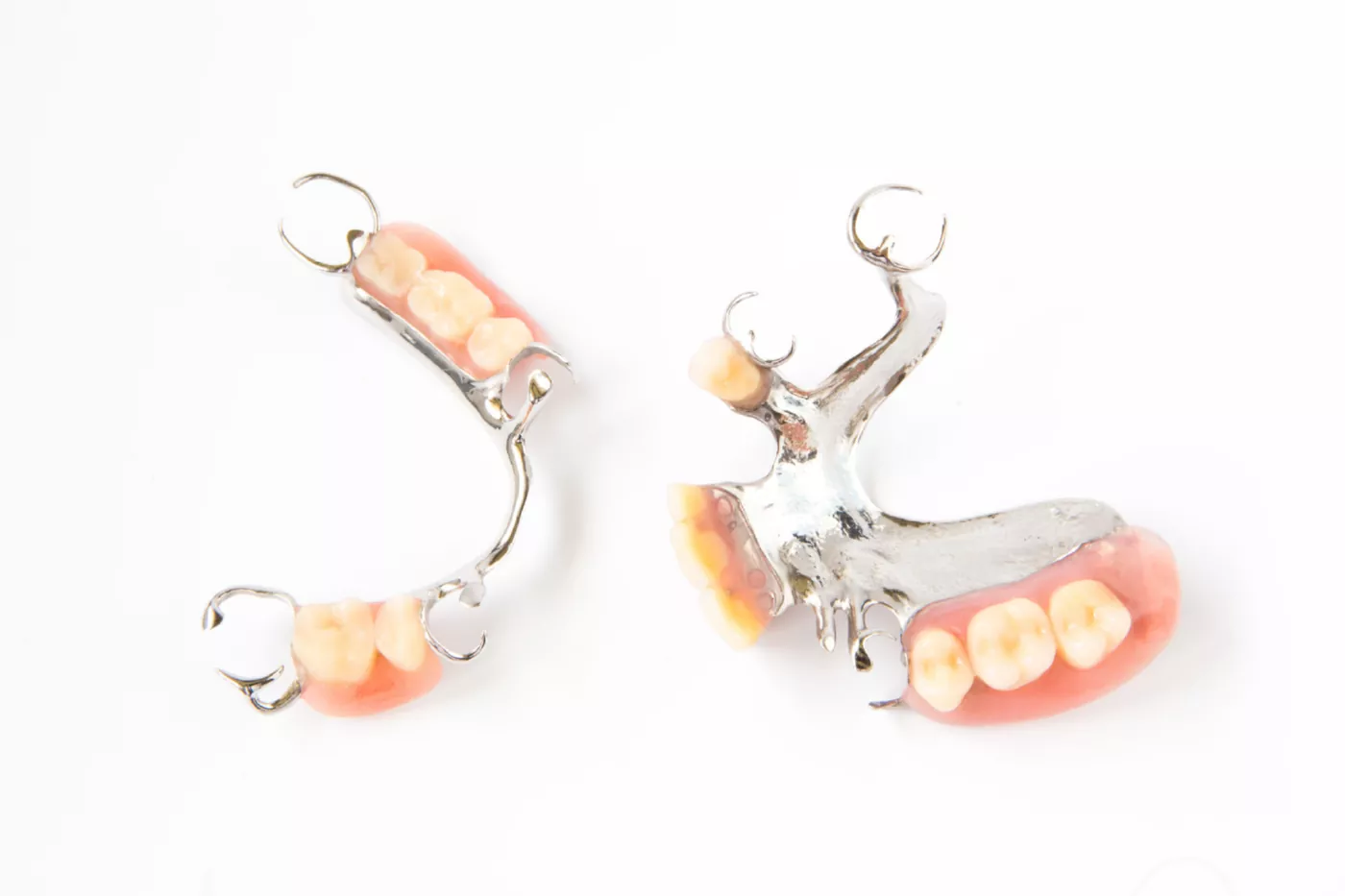
Partials are meant for replacing several missing teeth and using the ones you’ve got left for support. Because they rely on those support teeth, the design has to be careful not to put too much strain on them, and to distribute your chewing forces evenly. Metal-frame partials are often the go-to for people who want strong, lightweight dentures, whereas acrylic partials are often used as temporary dentures for people whose mouths are still changing. Flexible partials can be pretty discreet, but your dentist will have to figure out which one is best for your bite.
If you’ve got weak support teeth, active gum disease, or are missing a bunch of teeth, a partial denture can become unstable or put too much pressure on the remaining teeth. In that case, the real question is not “what kind of partial do I get”, but “what’s the best way to protect what’s left?”
Immediate dentures vs conventional dentures
Immediate dentures are fitted right after an extraction, so you can keep eating and drinking without being toothless for a few weeks while the gums heal. However, because the gums change a lot in the first few weeks, the denture will probably need a reline, and you’ll likely need some adjustments.
Conventional dentures, on the other hand, are made after the healing has settled down, & food here you could have a pretty predictable long-term fit from the start. Some people will use an immediate denture as a ‘holding pattern’ then switch to a more stable long-term denture once the tissues have settled down.
Snap-in dentures: implant-retained dentures
A snap-in denture is still removable, but instead of just sitting in your mouth, it clicks into place on dental implants using small attachments. So, you can take it out & put it in by yourself, which is handy for cleaning.
Lower dentures can be pretty tricky to fit, which is why some people opt for a snap-in option. Your dentist will look at how much bone support you have and the pressure of your bite to decide whether dental implants are a good idea, and what kind of attachment system will work for you, so your dentist will use imaging to help decide.
Questions to ask about snap-in planning
Don’t be afraid to ask some pretty basic questions early on, or you might end up comparing quotes that don’t include everything. The goal here is to get a clear picture of what’s included and what will happen when you need some follow-up work, so get it all in writing.
- What kind of imaging will you use to take a look at my bone and gum structure?
- What’s included in that quote? Are you covering implants, dentures, relines, and follow-up visits?
- What happens if something wears out or breaks? How often can you expect to need some maintenance or repairs?
- If you live far away, what can you handle locally, and what will you need to come back in for?
Maintenance is just part of the deal.
Attachments wear out, and you might need to get your denture relined as your gums change; that’s all normal, and usually pretty manageable. But, it’s always good to ask what you can expect in the first year, and what kind of follow-up work you can handle at home if you live far away from your dentist’s office.
Fixed dental implant-supported options
Fixed implant-supported teeth are designed to stay in place, and you clean around and under them with special tools. Your dental team might remove them now and then for a deeper clean.
This route is a good fit for people who really like the idea of having fixed teeth and are prepared to keep up with a pretty consistent hygiene routine. Your daily habits will make a big difference in how well this works out.
All-on-4 & other options
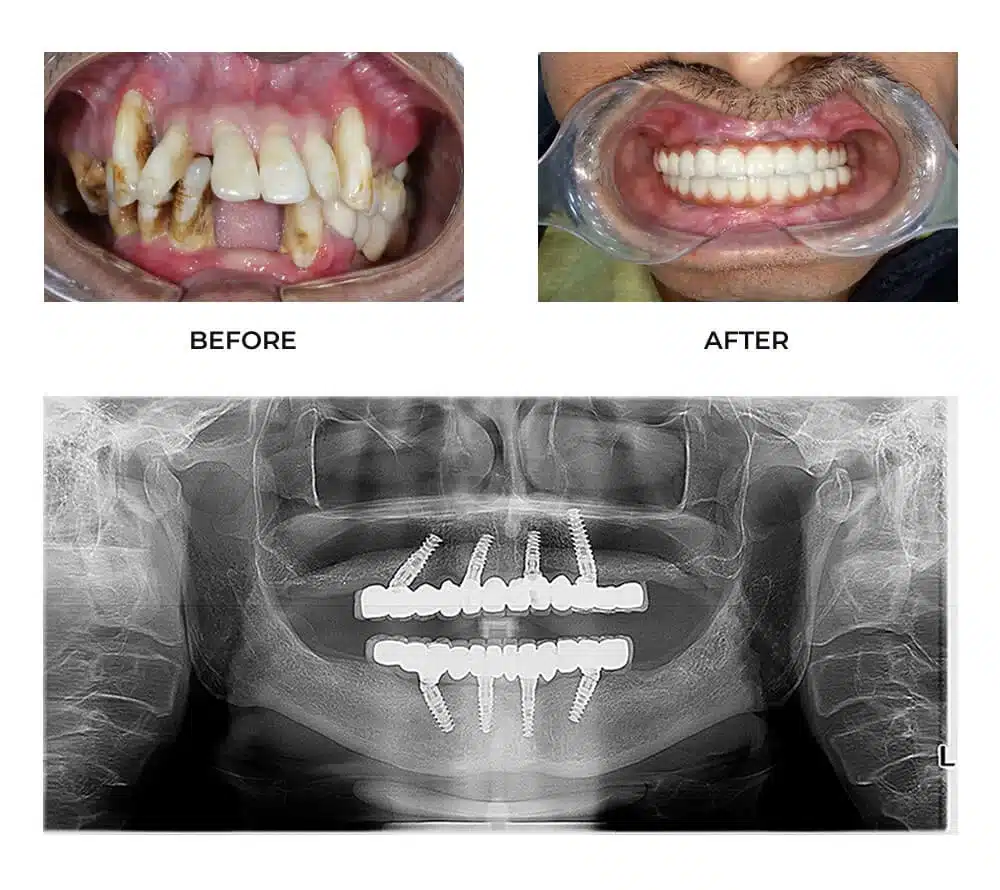
All-on-4 is a full-arch implant concept that some people might want to look at. It’s a way to get a fixed, permanent denture with just four implants. But, this will only work if you’ve got the right kind of bone support and a pretty healthy profile. A proper exam and imaging will give you a better idea of whether this is a good fit for you.
How dentures are made (why multiple visits are so important)
Most clinics start by taking records (photos, impressions, bite evaluation, and maybe some digital scans), then they’ll make a bite registration to get an idea of how your jaws fit together. Many dentists will also do a try-in stage, where you get to check out the denture setup & bite before they make the final one.
After the denture is delivered, you’ll probably need a few adjustments to get rid of any sore spots. And in the case of recent extractions, you might need a reline once the tissues have settled down. That follow-up work is totally normal; it’s just part of fitting a device to living tissue.
Fit, comfort, & lifespan: How long do dentures last?
Even a well-made denture can feel a bit weird at first; that’s normal, and some minor adjustments will usually make a big difference. If you’ve got sharp pain, worsening sores, or can’t chew, give your clinic a call. And after an extraction or implant surgery, see your dentist ASAP if you notice any swelling, fever, or signs of infection.
Your fit will change gradually as your gums and bone remodel, especially if you’ve had extractions. A reline can usually restore the fit & reduce movement, so instead of asking “how long do dentures last”, ask “what’s the follow-up plan to keep this fitting well?”.
What drives denture cost
Denture costs can be all over the place because the plan usually includes way more than just the denture. Digitally made dentures utilize advanced technology to create a precise fit based on 3D images of the patient’s mouth. The real drivers are extractions or gum care, materials, bite complexity, number of appointments, adjustments, and whether implants are involved. To get a decent estimate, ask for a written plan that breaks down the denture, pre-treatment work, imaging, and follow-ups. Also ask how many adjustments are included and if a future reline costs extra. Modern dentures can be customized with high-density, stain-resistant materials.
For the traveling crowd, it pays to know what your local dentist can handle versus what the original clinic is responsible for, fit and warranty-wise. That one little detail can blow the cost right out of the water.
Planning in Los Algodones (a quick tip for travelers)
Los Algodones is big on dental tourism because it’s so close to the U.S. border and set up to make visits super efficient. For people flying in from out of town, accuracy matters way more than just finding the cheapest place. Before you go, get a clear idea of how many visits you’ll need, what happens at each one, and what to do if you need a denture reline or fix while back home. DDR’s free Virtual Diagnostic is a great way to start the conversation before you head down.
What’s next?
If you’re trying to pick between full dentures, partials, immediate dentures, snap-in dentures, or fixed dentures, the best way to stop second-guessing yourself is to get a plan that takes into account your mouth and your goals. DDR’s Free Virtual Diagnostic is a great way to get a feel for what your options are, then iron out the details with an in-person exam and a full diagnostic, so that you can get a final recommendation that really works for you.