

You’re probably wondering, “How does Invisalign work?” Well, let me tell you, you’re not alone. Clear aligners do look pretty easy to use, almost like “plastic trays”, but they’re not just that. Invisalign is actually a thoughtfully crafted teeth straightening system that uses gentle force and precision to move teeth in tiny, controlled steps.
If you’re planning to travel to Los Algodones to get treatment, it really helps to understand the process before you even book your appointment and set realistic expectations for visits, timing and follow-ups.
At Dental del Rio (DDR), many patients start with a complimentary virtual diagnostic to see if Invisalign is a good fit for them, then confirm the plan in person with scans and an exam.
What Invisalign Is and What It’s Not
Invisalign is an orthodontic treatment that straightens teeth by applying consistent pressure using a series of custom-made, removable, clear aligners. Each one is designed to move a specific tooth a tiny bit, and the next one picks up from there. The Invisalign treatment typically takes less time than traditional braces, ranging from four months to two years, depending on the complexity of the case.
What Invisalign is not is some sort of magic one-size-fits-all product. It really works best when your oral health is properly diagnosed, planned and monitored by a licensed dentist, especially if you have bite issues, gum problems or teeth that need more than a simple cosmetic tweak.
Invisalign can be pretty discreet, but it’s still real orthodontics, not just a fad. You get results by following the plan, not just by “wearing it when you feel like it” Wearing retainers is essential for life to ensure that teeth remain in their new positions after treatment.
How Invisalign Aligners Work in 5 Easy Steps
So how does it work? Well, Invisalign starts with an exam and a 3D scan to get a picture of your teeth and bite, then a digital plan maps out the staged movements. Invisalign aligners are made from a smooth, virtually invisible plastic material, making them less noticeable than traditional metal braces. You wear each aligner for 20-22 hours a day and switch sets on schedule, then go back for check-ins to confirm tracking, and get any refinements to fine-tune the details. You also get retainers to keep your new smile stable.
The Invisalign Process, Step by Step
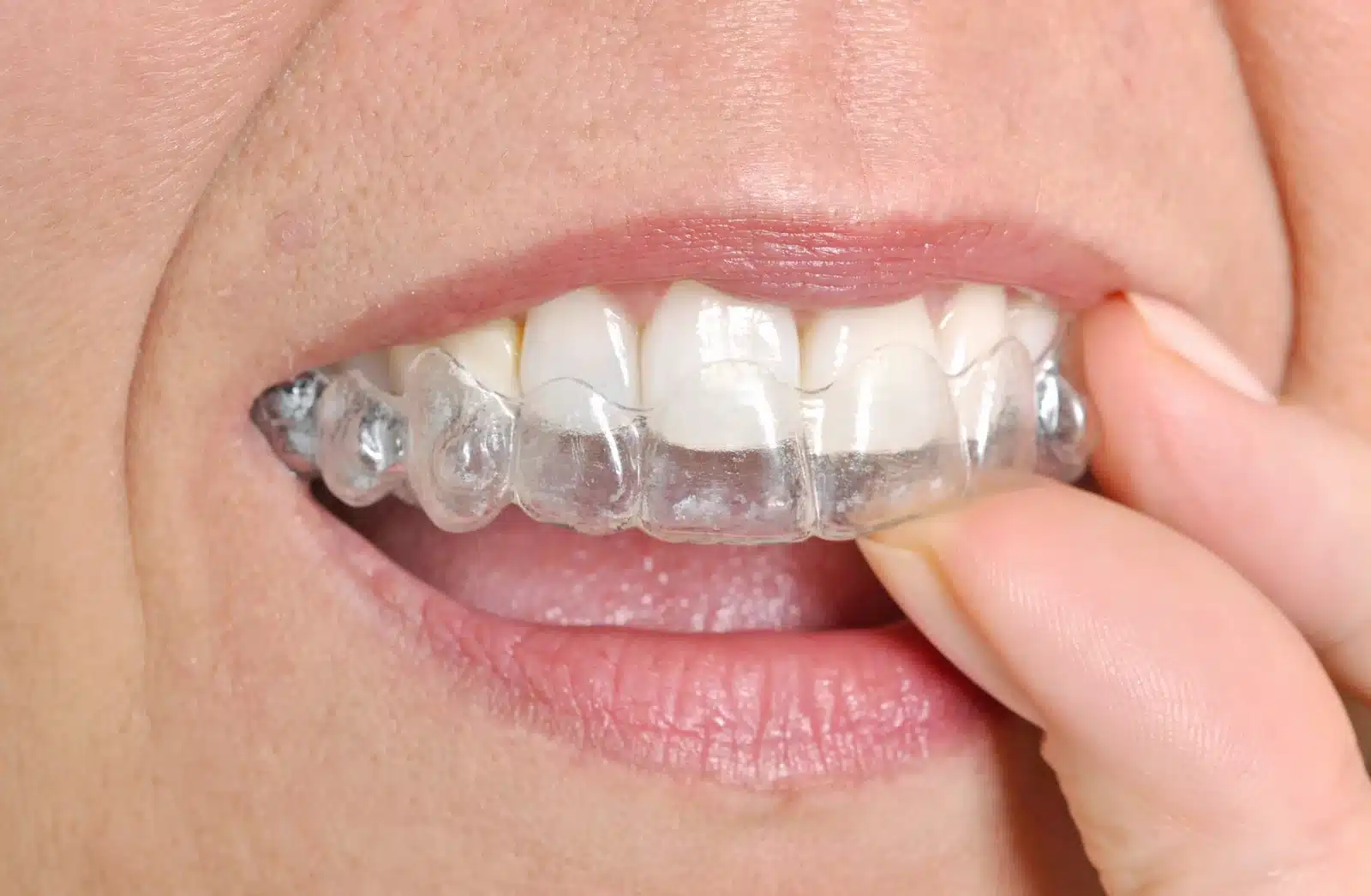
The average duration of Invisalign treatment can range from 6 to 18 months, depending on the complexity of the case.
Step 1: Get an exam, records and a 3D scan
Treatment starts with an exam to make sure your teeth and gums are healthy enough for the aligners, and if you have any active decay or gum inflammation, those need to get sorted out first.
Next up are the records, which usually include some photos, a bite evaluation and a 3D scan of your teeth. Depending on your situation, your dentist may also recommend some X-rays to get a more accurate picture of your bite.
Step 2: ClinCheck planning, your digital roadmap
After your records are done, a digital treatment plan gets created, using a digital blueprint for movement (also called ClinCheck). It shows where each tooth is now, where it needs to go, and the little stops it’ll make along the way.
Now, here’s the thing: aligners don’t try to push everything at once. The plan breaks the movement down into small, predictable steps so your teeth can respond safely, and your dentist can anticipate any spacing or bite changes that might come up.
Step 3: Get your aligners and learn how to use them
Once the plan is all set, your aligners get made and delivered to you as a series. Most people wear them close to full time and only take them out to eat and for brushing and flossing. Your dentist will tell you when to switch to the next set, which is usually every one to two weeks.
Now here’s the catch: aligners only work when they’re in. If you don’t wear them as directed, your teeth might fall behind schedule, and treatment can take longer.
Step 4: After the Invisalign Treatment: Check-ins, tracking and refinements
Throughout treatment, you’ll have progress checks to make sure your teeth are tracking properly, meaning they’re following the staged movement the aligners were designed for.
If they’re not tracking right, your dentist may need to make some adjustments to the plan. Sometimes that means extra time in the current aligner, and sometimes it means a new scan to get things back on track.
Step 5: Get your retainers and keep your new smile
When your active aligners are done, you’re not quite finished yet. Teeth naturally want to drift back to their old positions, especially in the first few months after treatment, so retainers help keep things stable while the surrounding tissues adapt.
Most dentists recommend wearing retainers full-time to begin with, then shifting to nighttime wear. The exact schedule depends on your case, but nighttime wear is pretty common in the long term.
The Science Behind Invisalign
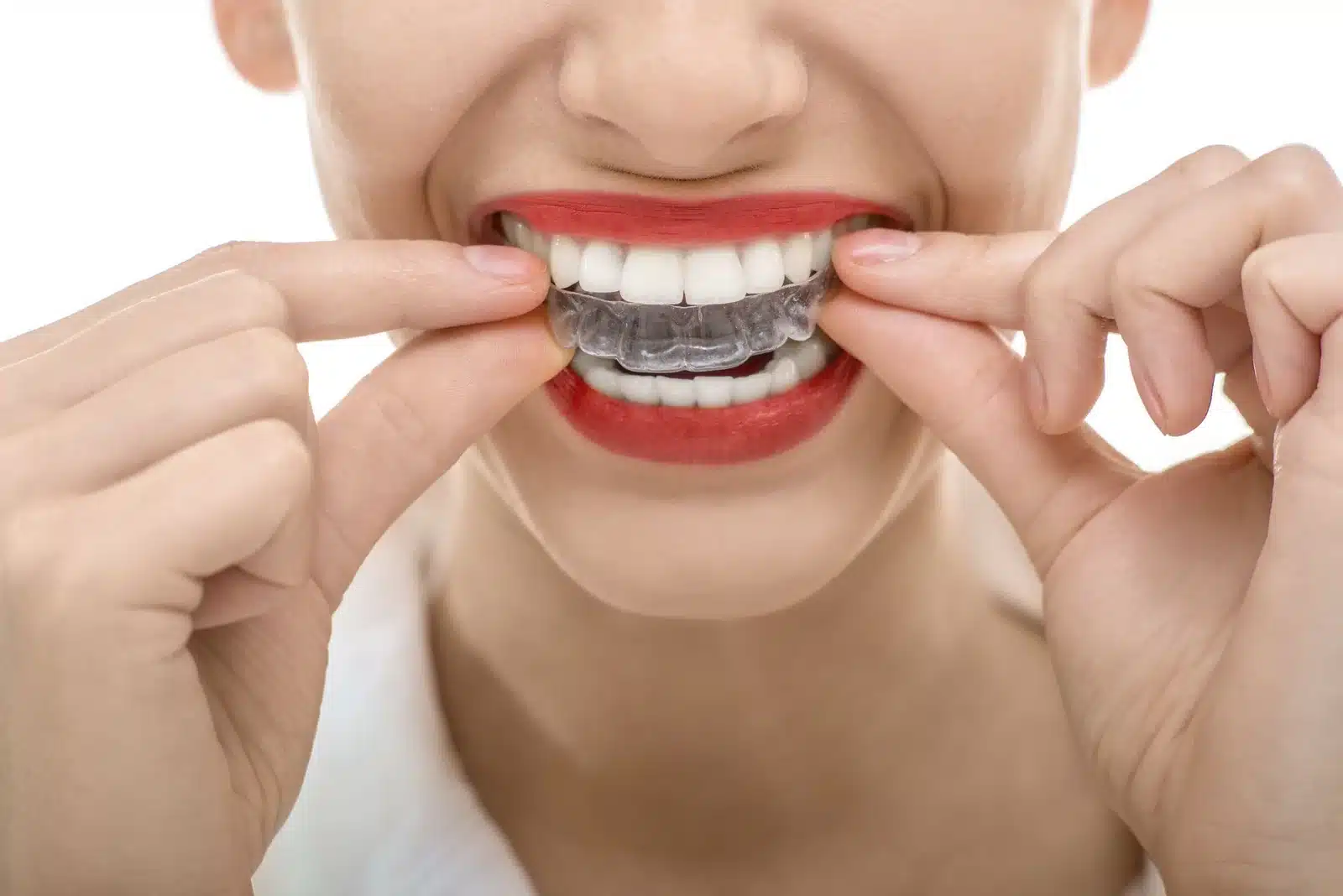
Gentle force and timing, what your body does
Teeth are held in place by some supportive tissues that respond to pressure. When an aligner applies gentle force, your body adapts by remodelling the bone around the pressure. Over time, that’s what allows a tooth to shift position and give you a straighter smile.
This is why Invisalign uses staged aligners rather than trying to make a huge push at once. Small steps give your body time to adjust, and biology takes the lead if your teeth need a little extra time to catch up.
Attachments, elastics, and IPR, when they come into play
Not every Invisalign case is just about the aligners; some teeth need a little extra help to move in the right direction, which is where these tiny attachments come in. They’re small, tooth-coloured bits that help the aligners grip your teeth and apply force more precisely. Your provider may also use elastics (rubber bands) to help correct any bite problems you might have.
In some cases, your dentist may suggest IPR (interproximal reduction), which is a gentle way of smoothing the surfaces of your teeth to create a bit more space. It’s usually measured in super tiny increments. If these tools show up in your plan, don’t worry, it’s just your dentist making sure you get the best possible straight teeth.
What kind of Dental Issues can Invisalign Fix, And When Metal Braces Might Be The Better Option
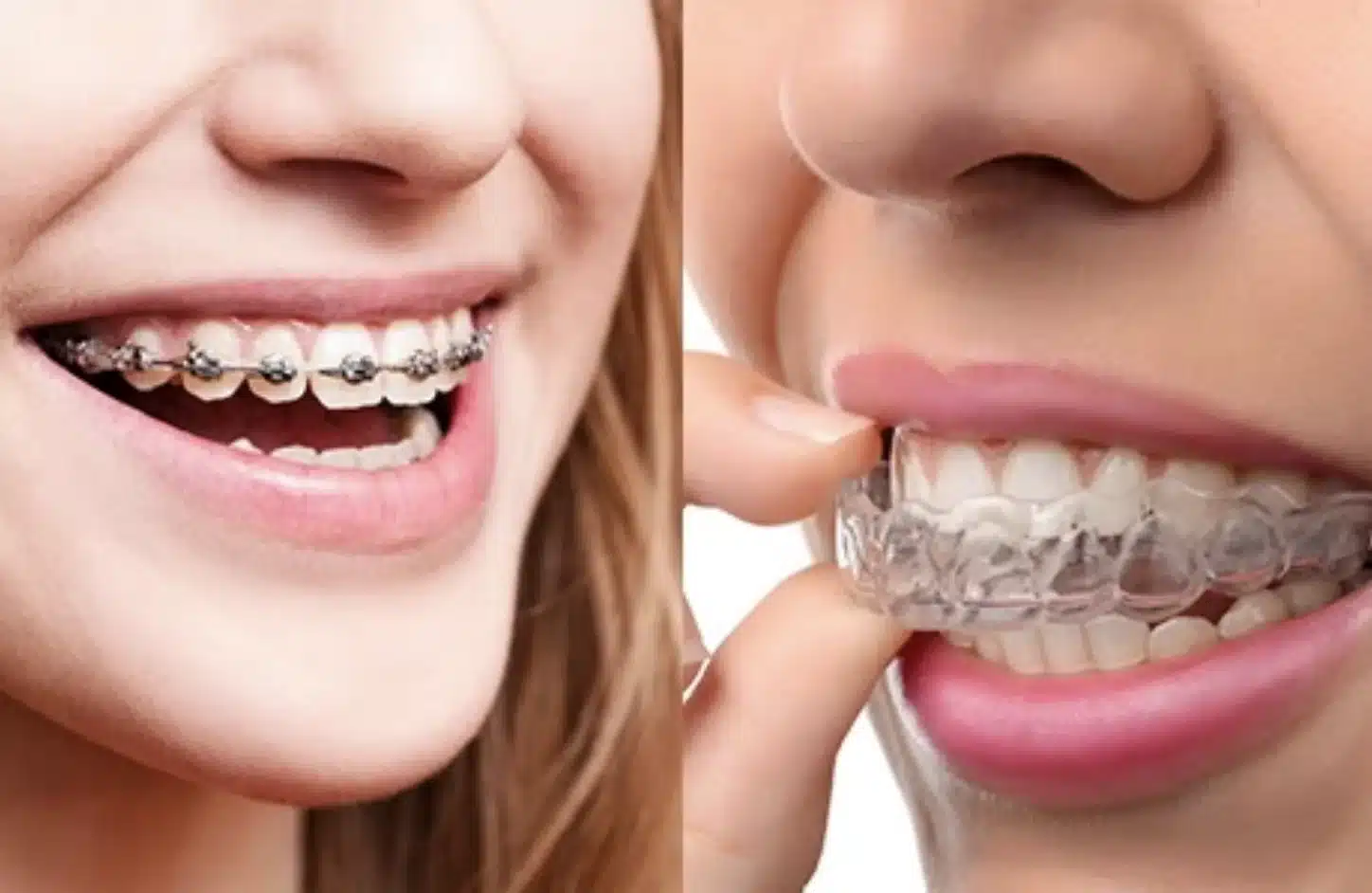
Invisalign is great for lots of everyday alignment issues, especially in cases that aren’t too severe, where your teeth and gums are healthy, and you can stick to wearing the aligners every day. Also, Invisalign requires fewer office visits for adjustments compared to traditional braces, which often require regular tightening appointments.
If your case involves major changes to your bite, twisted teeth, or jaw problems, conventional braces or a hybrid approach might be a better bet. That’s not failure, it’s just making sure you get the best possible outcome.
Common issues Invisalign can help with
Invisalign provides a more predictable treatment outcome due to its advanced digital planning technology compared to traditional braces.
- Gaps or crowding that’s not too bad
- If you’ve had braces before and your teeth just relapsed
- Some bite issues (but it depends on the case)
When braces might be the better choice
Invisalign is suitable for a wide range of orthodontic issues, but traditional braces may be better for extremely complex cases.
- If your bite is really out of whack or you have jaw problems
- If you need really precise control over your teeth movements
- If you have trouble keeping up with the aligner’s schedule
What Invisalign Feels Like Day To Day
Discomfort and that first week or two
After completing Invisalign treatment, retainers are provided to help maintain the results. You can expect a bit of gentle pressure when you first start or switch to a new aligner, because it’s normal to feel some discomfort at first. What’s not normal is sharp pain, swelling, or symptoms that don’t go away after a few days, so don’t hesitate to get in touch with your dentist if that happens.
You might notice a bit of a lisp at first, but most people adjust pretty quickly once they get the hang of things.
Eating, drinking, cleaning and keeping your trays looking their best
You take the aligners out to eat, then brush and floss before putting them back in. Water is probably the safest drink to have while you’re wearing them, and be careful with hot liquids because they can warp the trays, and sugary drinks because they can increase the risk of cavities.
Clean your aligners gently and regularly using the method your dentist recommends. Gentle cleaning is key; don’t scrub too hard, or you might end up scratching the trays and making them look cloudy.
Travel, busy schedules, and staying on track
If you travel a lot, pack a little kit with everything you need: a case, a toothbrush, floss, and some rinse. A reminder on your phone can help you stay on schedule, and keeping a case handy reduces the chance you’ll lose your trays at restaurants.
If you miss a few days, don’t try to catch up on your own. Put the aligners back on and get in touch with your dentist if you’re not sure what to do.
Starting Invisalign Down In Los Algodones with DDR (For U.S. and Canada Patients)
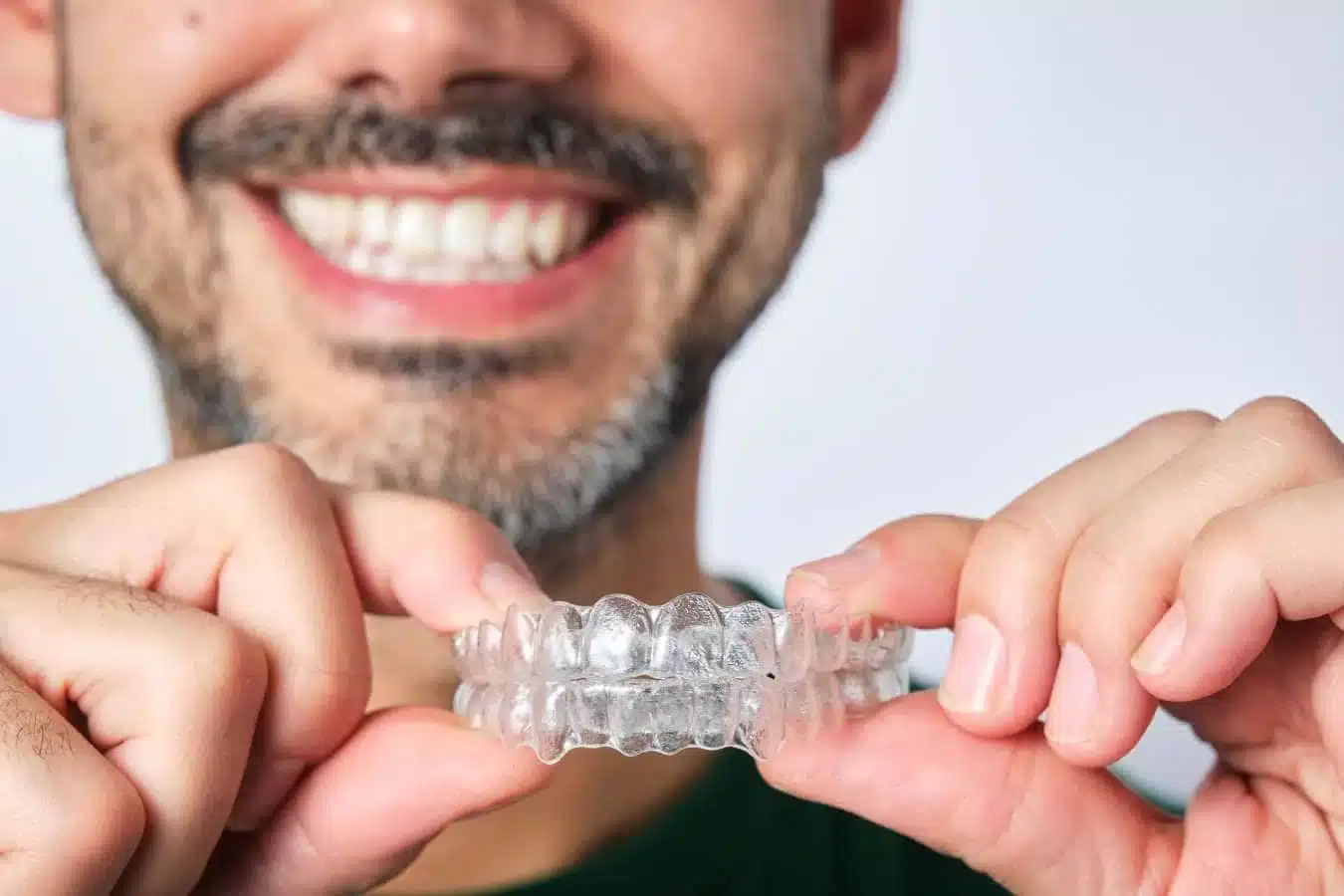
Even if you live in the U.S. or Canada, Invisalign can still be a good option, especially with DDR down in Los Algodones. The key is to plan for regular check-ins with clear goals and open communication.
How much does Invisalign cost at DDR when compared to U.S. and Canadian Prices?
The cost of Invisalign treatment can vary based on several factors, including the complexity of the case which can affect treatment duration, yet, one of the biggest factors for a lot of patients to get their Invisalign at DDR is the cost (even saving up to 50-70%, going on a case-to-case basis) without sacrificing quality compared to what you’d pay in the States. At DDR, you can get Full-Mouth Invisalign starting at $3990, while in the U.S., the average starts at $5000, going up to $8000 (for example, the standard cost of Invisalign treatment at some of our competitors is $6,450). Even if you factor travel and stay expenses for a short trip down to the border into consideration, it’s still way cheaper than getting them in the U.S. or Canada.
Why getting a Customised Treatment Plan at DDR in Los Algodones is the best option out there for your Invisalign:
At DDR, your treatment plan is in good hands with Drs. Alejandro Barragan and Xochiquetzalli Bohorquez, two qualified dental professionals who have between them over 20+ years of experience and a string of international certifications, all of which mean they know their stuff & can guide you every step of the way. We also offer a Free Virtual Diagnostic so you can get a head start before crossing the border. Just send us over some smile photos and any recent records you have, and the team will give you an idea if Invisalign is a good fit for your goals.
Of course, you’ll still need that in-person exam and diagnostics (that’s just good old-fashioned care to help make sure you get the best results). Plus, DDR has bilingual staff who can give you plain English explanations of what to expect, when, and how, and they also help with patient logistics, offering a shuttle and some coordination help to make your trip as smooth as possible.
What’s Next? Are Invisalign Custom Aligners Right for You?
If you’re thinking of going down the Invisalign route and also want a plan that works with your travel schedule, then the first step is to get in touch and ask about our Free Virtual Diagnostic. We’ll give you an honest rundown of whether your teeth are a good match for Invisalign and what the follow-up appointments might look like.