Tooth loss can make everyday life far more complicated. If you’re weighing up dentures vs bridges, start with a very simple question: do you want something that stays put, or something you can quickly pop in and out?
The answer largely depends on how many teeth you’re missing, what shape the healthy teeth you’ve got left are in, and how well you can realistically keep on top of cleaning. If you’re planning on getting out of town for treatment. At Dental del Rio (DDR) in Los Algodones, we can review your case via a free Virtual Diagnostic, then check in on you in person to confirm your options.
Bridges and Dentures: The Main Difference
A bridge is usually stuck in place, meaning you don’t need to remove it to clean it. Dentures, on the other hand, are removable, which means you’ll need to take them out to clean (and often to sleep). Bridges can feel a lot more natural than dentures do, while dentures are great for replacing missing teeth in whole rows at a time. Some dentures can even be secured with implants for added stability.
Side-by-side snapshot
| Snapshot | Dental bridge | Dentures |
| Best for | One tooth or a short span | Several teeth or a full arch |
| How it stays in | Cemented to support teeth or secured to implants | Rests on gums and may use clasps or implants |
| Daily care | Cleaning around and under the bridge | Remove, clean, and also clean gums/remaining teeth |
What a Dental Bridge Actually Is
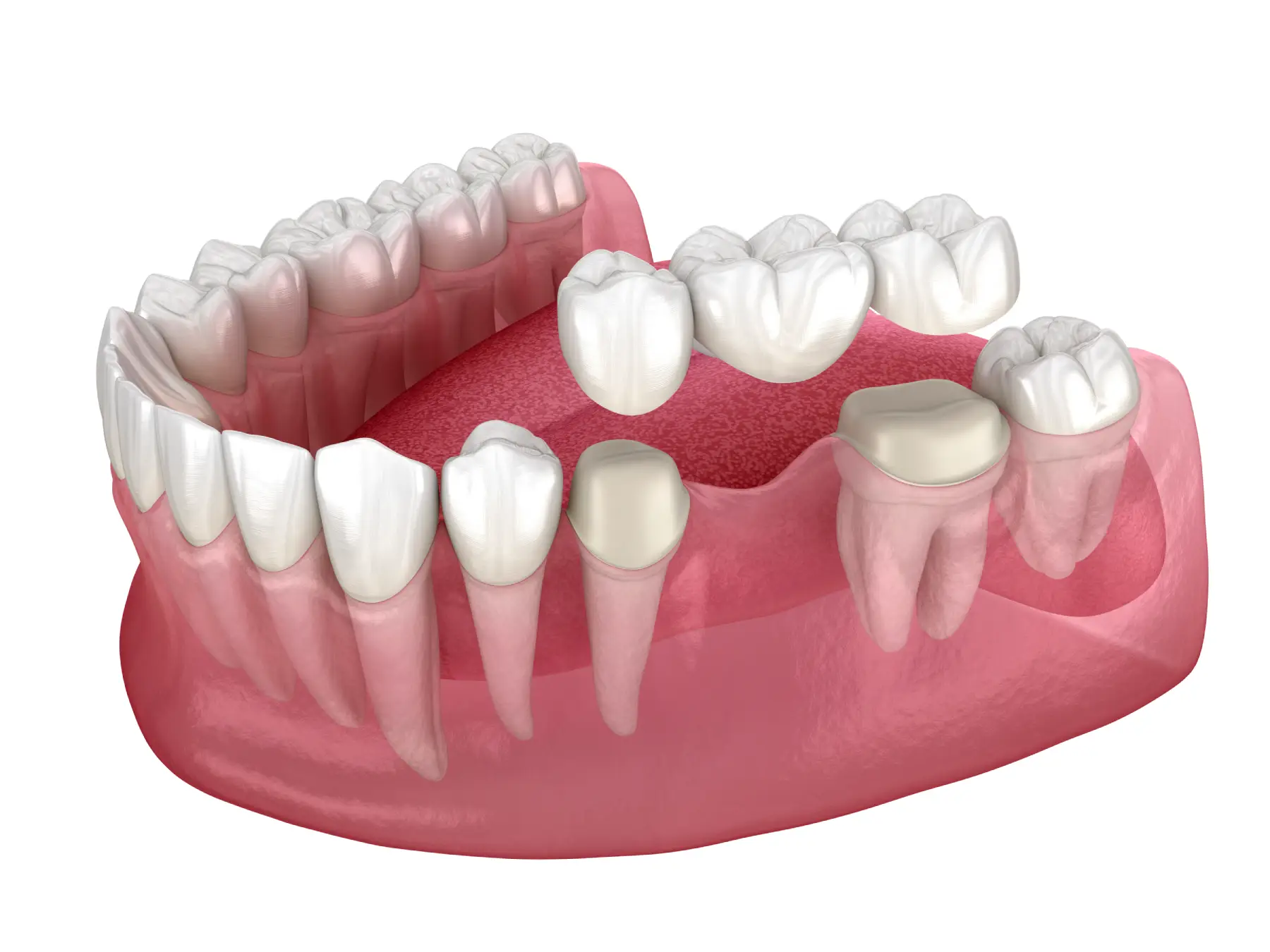
A bridge replaces a missing tooth with a fake one (called a pontic) that’s held in place by support on either side. In a traditional bridge, the neighboring teeth get shaped to hold dental crowns that anchor the fake tooth, which is why the strength of those supporting teeth really matters.
Some common types of dental bridges include:
- A tooth-supported bridge: where the bridge is stuck to dental crowns on the teeth next to the gap.
- An implant-supported bridge: where the bridge is secured by implants instead of your natural teeth.
- A Cantilever or Maryland-style bridge, which is used in some pretty rare cases.
The materials used for bridges can vary, depending on how hard you bite, what tooth you’re replacing, and what you’re looking for in terms of looks. Your dentist can go over porcelain-fused-to-metal, full ceramic, or zirconia with you.
“False Teeth”: Complete and Partial Dentures, what are they actually?
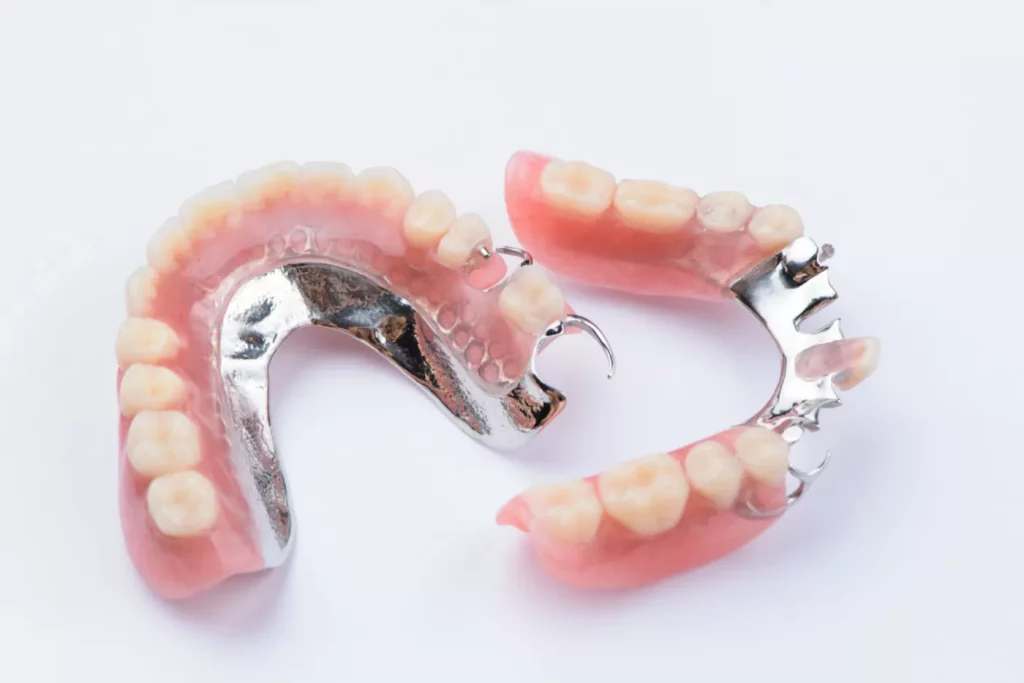
Dentures are basically removable prosthetics used in reconstructive and Cosmetic Dentistry to restore both the appearance and function of your smile. Complete dentures help replace missing teeth in one arch. Partial dentures fill multiple gaps while using a framework or clasps to anchor them to the teeth you’re still holding on to, so they can be a good option if you want to restore your smile without needing to crown a bunch of teeth.
Be prepared for a bit of a learning curve at first, especially when you’re getting used to your new dentures. Early sore spots and small adjustments are pretty common, and you may need to get your dentures re-lined over time as your gums and bone change. Implant-supported dentures, which use dental implants as anchors, can help reduce movement and make chewing a lot more confident, especially when stability is a top priority.
Comfort and Stability: Key Differences Between Removable and Fixed Bridges
A bridge is cemented (or secured with implants), so it often feels rock solid during chewing. Dentures rely on how well they fit and how much they press against your gums, so the ‘grip’ can vary as you get used to them.
If stability is what you’re most concerned about, ask about dental implant-supported or snap-in dentures. They can feel a heck of a lot more secure while still being removable for cleaning.
Daily Hygiene: What Changes for Your Oral Health?
With bridges, the key is cleaning under the fake tooth and along the gumline with a floss threader or interdental brush. With dentures, you remove them first, clean them gently, and then clean your gums and any remaining natural teeth.
Lots of people remove dentures at night, but follow your dentist’s advice, especially if you’ve got immediate, relined, or implant-attached dentures.
A Quick Guide for Different Missing Teeth Scenarios
One missing tooth: A bridge might be a good option if the adjacent natural teeth are strong enough. But if those teeth are heavily filled or compromised, consider getting implants so you don’t rely on them for support.
Several missing teeth in a row: A bridge is possible, but support is a big issue. If the support teeth aren’t up to the task, consider a partial denture or an implant-supported bridge.
Many missing teeth (some natural teeth left): A partial denture can replace multiple gaps without crowning several teeth, and can be a practical stepping stone as you plan your next moves.
Full arch missing (or close): Complete dentures can give you back a full smile, and implant-supported options can help them stay in place and reduce slipping.
Upgrade Paths: When Your Plan Can Evolve
- From a regular denture to a snap-in: adding implants gives you a more secure feel.
- From a tooth-supported bridge to an implant-supported one: implants can provide support without prepping your adjacent teeth.
- From partial now to fixed later: a partial can be your stepping stone while you plan healing or budget.
Cost and Value: What Drives the Price
Bridges can vary a lot in price, depending on the length of the span, support needs, and materials. Dentures can vary depending on whether they’re partial or complete, how complicated the design is, and how much adjustment work is expected. Imaging, extractions, and implants (if used) can all change the plan and the price. At DDR, start off with a Free Virtual Diagnostic, and you’ll get a personalized quote after the exam. Get a breakdown on your options when we give you a quote, so you can compare apples to apples without any confusion.
Planning your trip to Los Algodones with DDR
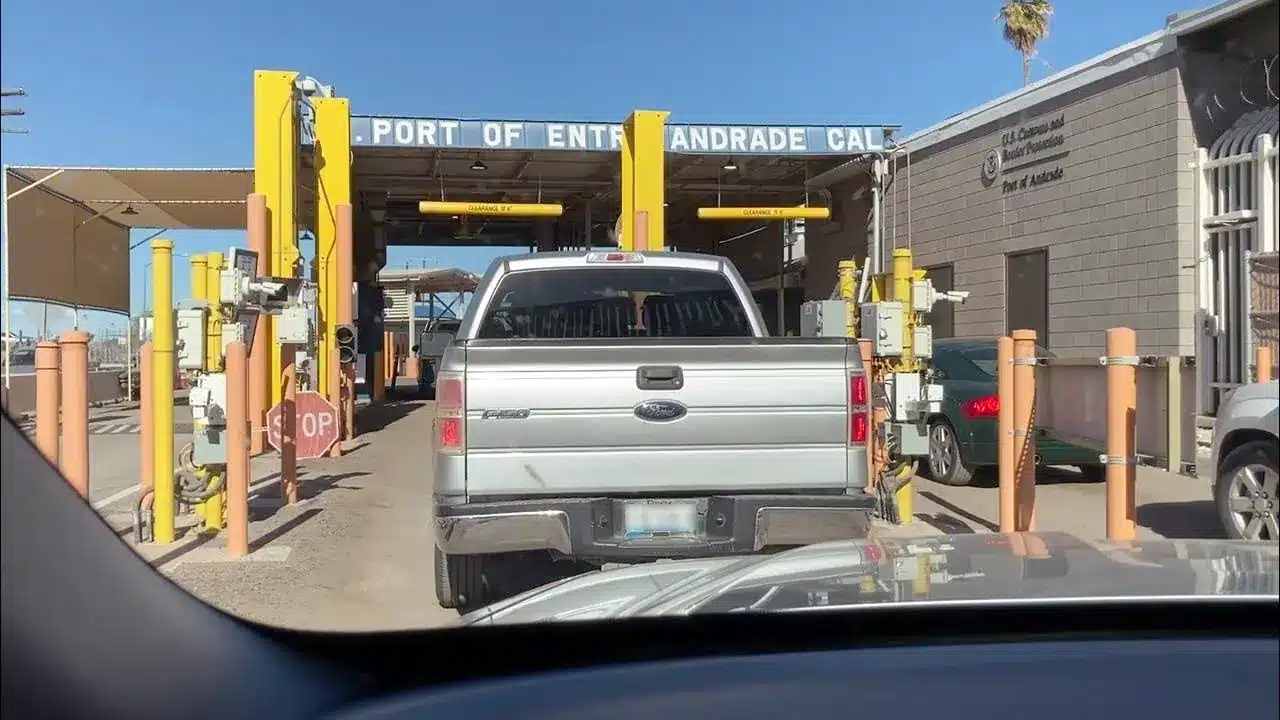
Los Algodones has really streamlined the process for those crossing from the U.S.; in fact, it’s a very popular destination for folks from both the U.S. and Canada looking for dental work. And it’s not just a coincidence that Cancun is another big destination for dental tourists; the added travel time can be a bit of a pain when you’re trying to fit in a dental visit.
At DDR, we believe having bilingual communication and traveller support is key. We make sure to nail down what to expect in terms of follow-up care, especially if you’re getting a new denture or a bridge fitted before you even leave town.
Think carefully before committing.
Don’t commit to anything without asking a few key questions:
- What kind of imaging and diagnostics will they use for your specific case?
- What option do they think is best for the long-term health of the rest of your teeth and gums?
- How do they ensure a good fit on the new denture or bridge? What materials and lab steps do they use?
- What kind of warranty or remake policy do they have in place?
- What happens if you need to make any adjustments back home after you’ve had your work done?
Frequently Asked Questions
Bridges vs. dentures, which is better?
It’s not always a straightforward choice. Bridges can feel more natural because they’re fixed in place, but they do require strong anchoring teeth or implants. Dentures, on the other hand, can replace a whole bunch of teeth at once and are removable.
Will dentures feel loose all the time?
At first, they might, and over time, the fit can actually change. If stability is your top priority, talk to them about options like implant-supported or snap-in dentures.
Will a bridge affect the teeth on either side of the gap?
If you’re getting a traditional bridge that’s anchored by another tooth, you’ll need to get that other tooth crowned. If that tooth is healthy, it’s worth asking if an implant-supported option might be a better choice.
Is it harder to clean dentures or a bridge?
Dentures are pretty straightforward to clean because you can just take them out. Bridges, on the other hand, need to be cleaned with the right tools and can be a bit trickier.
Next step: get a plan
If you’re weighing up the pros and cons of bridges and dentures as tooth replacement options, share more details about the teeth that are missing and whether you prefer to have a fixed or removable solution. Then ask for a plan that takes into account your specific imaging, support needs, and maintenance requirements.
Get Your Free Quote
If you’re planning a trip to Los Algodones, start by getting a Free Virtual Diagnostic or requesting a quote. This will help you compare your options and travel logistics so you can plan a more stress-free trip.