
For people with missing teeth, the impact affects more than just the appearance; it can undermine confidence, functionality, and even harm their facial shape. Dentures are a great way of restoring a natural-looking smile, but wearing partial dentures can be a bit rough at first, especially if multiple teeth are being replaced. But to be fair, ongoing pain is just not normal. Most people adjust to them within 2-6 weeks, though it’s fair to say the first week or so is going to feel the most awkward.
- For many patients, a bit of mild soreness, a load of extra saliva, and a bulky feeling around the existing teeth are all part of the initial adjustment period.
- But if you’re getting sharp pain after the process, notice your dentures keep coming loose, or find that your discomfort just gets worse: you need to get your dentist to take a look.
- There are a few home remedies you can try to get some temporary relief: a saltwater rinse and some soft foods can help, but a lot of the time you’ll need a pro to sort things out.
- Modern partial dentures are designed to be comfortable, and most people get the hang of them after a few adjustments.
Are Removable Partial Dentures Really Supposed to Be That Uncomfortable?
There is a bit of discomfort to be expected in the first 1-2 weeks as your mouth gets used to the denture.
Symptoms to keep an eye out for:
- Mild sore gums
- A bit of a bulky feeling
- Saliva that’s a bit too enthusiastic
- Minor discomfort when chewing
- A bit of a wobble in your speech
These symptoms should start to decrease, but if you are experiencing persistent sore spots, bleeding gums, ill-fitting dentures that continue to fall out, or pain that makes eating difficult, you should have your dentist evaluate the situation so you can make an informed decision on your alternatives.

Why Do Wearing Dentures Feel So Uncomfortable?
The first thing you need to do is figure out what’s causing the discomfort. Here are a few common culprits:
- Pressure points: If the denture doesn’t fit properly, or there are any rough edges, this can cause sore gums, irritation, or even little ulcers.
- A bad fit: Bone loss, teeth shifting, or weight gain/loss can all make the denture start to feel a bit loose or unstable over time.
- Clasp issues: If the clasps are too tight or too loose, this can cause irritation to the gums or make it difficult to get the denture to stay in place.
- Bite problems: If the way your upper and lower teeth fit together is a bit off, this can make chewing uncomfortable or even lead to accidentally biting your cheeks or tongue.
- Oral health issues: The risk for gum disease, dry mouth, or oral infections can all make it harder to get comfortable with your new dentures.
And if you eat too many hard or sticky foods too soon, this can also create pressure points and make the adjustment period a lot more uncomfortable.
How Long Does It Take to Get Accustomed to Wearing My New Dentures?
Most individuals get used to partial dentures within a few weeks. The adjustment period tends to last a few weeks, and the first 3-7 days are usually the most tricky to get through.
Here’s a realistic breakdown:
| Stage | What to Expect |
| First 48 hours | Bulkiness, excessive saliva production, awareness of foreign object |
| Days 3–7 | Sore spots, learning to chew, speech difficulties |
| Weeks 2–4 | Chewing and speech steadily improve; minor sores heal |
| Beyond 1 month | Should feel mostly routine for daily life |
Most people take around 2-6 weeks to get used to partial dentures, although a bit of soreness and a bit of a wobble in your speech is pretty normal in the first few days.
Tips to make the adjustment go a bit smoother:
- Try to wear your dentures for a bit longer each day; start with an hour or so and see how you go from there.
- Read out loud for 10-15 minutes a day to get your speech back on track.
- Stick to soft foods for a bit, and try to chew on both sides of your mouth evenly.
- If you experience any pain that just won’t go away, or you notice sores or bleeding that won’t sort themselves out after a week, get professional care and have a dentist take a look in case you need a replacement.
If you’re still in pain after 6-8 weeks and you’ve had loads of adjustments, your dentist may need to take a closer look at the fit, design, or material of your dentures.

Home Remedies vs Professional Help for Denture Discomfort and Sore Gums.
Home remedies can do a bit to ease the pain, but if you’re getting persistent pain or a denture that just doesn’t fit right, it’s going to need the help of a pro.
Things that might help at home:
- A warm salt water rinse a few times a day to help soothe the gum inflammation.
- Take some over-the-counter pain relief if you need to
- Apply a cool compress to the sore area to help reduce swelling
- Stick to soft foods for a bit, and avoid spicy, acidic, hard, or sticky foods that might make things worse
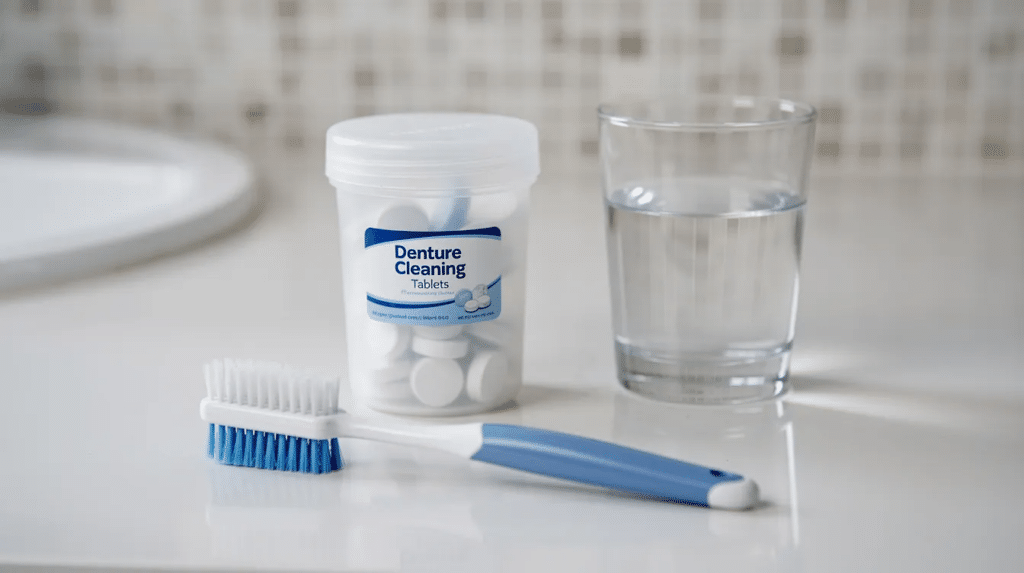
Daily denture care:
- Clean your denture every day with a soft brush and some gentle cleanser to remove food particles.
- Soak it in a denture cleaning solution overnight
- Don’t use hot water; it can warp the material
- Take the denture out at night and brush your natural teeth to keep them healthy.
Never try to sort out a problem with your denture yourself, and don’t use glue or a DIY repair kit either. If you’re still in pain, or you notice sores or bleeding, or you’re having trouble chewing or getting bad breath despite cleaning your teeth and denture, consult your dentist.
How to Make Partial Dentures More Comfortable in the Long Term
To get the best out of your dentures over the long term, you’re going to want a good fit, regular checkups with your dentist, and good oral hygiene.
In conclusion, to get the best results:
- Get in to see your dentist after you get your dentures, and try to arrange regular checkups every 6-12 months.
- Brush your natural teeth twice a day to keep them healthy, and clean around the clasps to protect your remaining teeth.
- Clean your denture every day and drink plenty of water to keep your gums healthy.
- Try to avoid smoking, and be careful not to eat too many hard or sticky foods that can damage or loosen your denture. With a bit of TLC and some expert fine-tuning, a partial denture will normally stay comfortable and work just fine for many years.
FAQ
How long does the soreness last after getting a new partial denture?
Mild soreness is pretty much to be expected for the first few days, 3 to 7 to be exact. But if the pain sticks around after 2 weeks or gets any worse, you need to get back in touch with your dentist and see if they can make an adjustment.
Will I be able to eat normally with a partial denture?
Most people are back to eating like normal within 3 or 4 weeks, although you might still need to be a bit more careful with really hard or sticky foods.
Can I leave my partial denture in while I sleep?
No. Most dentists pretty much all agree that you should take your partial denture out at night to give your gums a bit of a rest and avoid any irritation or infection.
Will I have to replace my partial denture?
Yeah, unfortunately, yes. A partial denture will generally need replacement or relining every 5 to 10 years, as your mouth and the rest of your teeth are constantly changing.
What if I’m still in discomfort after I’ve had a few adjustments?
If the discomfort keeps going even after a few adjustments, you might want to chat with your dentist about making some changes to the denture, or maybe looking into other options, like implant-supported ones.