
So, is popcorn bad for your teeth? Not necessarily, but it can be, if you’re not mindful. Plain popcorn on its own isn’t a dental disaster, but it can still cause problems if you’re not careful.
- The main risks are coming from unpopped popcorn kernels, those pesky popcorn hulls, and added sugars or butter, which can wreak havoc on your teeth and gum tissue.
- Popcorn’s not as bad as some other snacks, like dried fruits or candies, but it’s got its own set of specific risks, like cracking a tooth, gum infections, or abscesses.
- Keeping good oral hygiene with brushing, flossing, and regular dentist visits means you can enjoy popcorn in moderation, no problem.
- Below, you’ll learn all about the specific risks, safer eating habits, and some tooth-friendly snacks you can snack on instead.
Is Popcorn Really That Bad for Oral Health?
Popcorn’s a popular snack, especially when you’re hanging out at the cinema or just watching a movie at home, but there are a few reasons it’s bad for your teeth when you’re not paying attention. For your oral health, it’s not just about the popcorn itself, but how it affects your teeth and gums.
The good news is that plain old popcorn’s actually a pretty low-sugar, whole-grain snack. But the problem is all those hard little kernels, the sharp bits of hull, and sweet toppings. You’ve got three main things to watch out for: physical damage, gum disease flare-ups, and tooth decay, all caused by those nasty starches and sugars.
Air-popped popcorn is generally safer than caramel corn or kettle corn, but as soon as you add those sugars and syrups into the mix, the risks of cavities and decay go up.
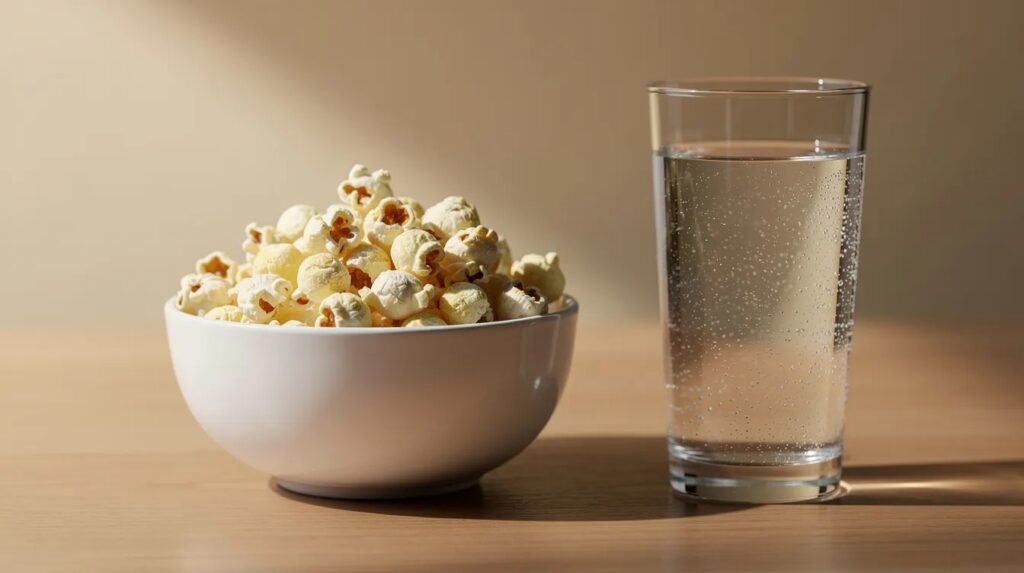
How Popcorn Can Really Mess Up Your Teeth and Gums
A single bowl of popcorn can expose your mouth to all sorts of tough bits, those pesky hard fragments, trapped popcorn particles, and fermentable carbs all at once, which can be a real problem for your teeth, whether they’re natural or you’ve got fillings, crowns, veneers, implants, or even braces.
People with existing dental work or a history of cracked teeth, gum disease, or dental problems face a higher risk, so be extra careful with those unpopped kernels, hulls, and stray bits.
Unpopped Kernels: When Little Bites Become Big Problems
Unpopped kernels are hard because they’ve got a tough little shell, and biting into one can be a real problem; either you’ll crack a tooth, or worse, chip off some of your tooth enamel. And if you’re unlucky, you might even end up with a cracked tooth, not always immediately, mind, but after a while, as the crack starts to show.
You might feel a bit of tooth pain or sensitivity when you’re eating, or you might just feel something’s not quite right. Whatever it is, stop eating and steer clear of the bottom of the bag, where all the unpopped kernels tend to collect.
Popcorn Hulls: Tiny Slivers That Drive You Crazy
Popcorn hulls are just tiny little fragments of shell that can get stuck between your teeth or under your gumline, which can lead to all sorts of problems, from gum irritation to infections.
You might end up with a bit of a splinter-like feeling, a red bump, some pus, or just a general feeling of being in pain, and if you don’t do something about it quickly, those infections can spread fast.
So keep an eye out for any of those signs, and if they show up, make sure to get in touch with your dentist ASAP.
Popcorn, Bacteria, and Tooth Decay
Popcorn’s got its own special relationship with cavity-causing bacteria, not because it’s some kind of magic food, but because those carbs just happen to be perfect for feeding those nasty little critters.
And the result? Lactic acid, which is just a nice way of saying your teeth are going to have a pretty tough time staying healthy.
Rinsing with water after you’ve eaten can help flush some of that lactic acid away, but it’s still worth being mindful about eating popcorn, especially if you’ve got any kind of dental work.
Is Popcorn Really Worse Than Candy, Dried Fruits, and Other Snacks?
Now, to be fair, popcorn’s not always the biggest risk when it comes to your teeth; it’s more of a mechanical problem, as opposed to the chemical damage you might see with sugars and acids. But that doesn’t mean it’s always the best snack choice; it’s all about being mindful of how you’re eating it.
Popcorn vs. Sticky Candies
Sticky foods like caramels and gummies just cling to your teeth, holding onto those sugars for dear life. And caramel popcorn? That’s just a recipe for disaster, adding both the mechanical risk of a stuck hull and the chemical risk of sugar and acid. Sticky textures have a knack for getting a good grip on crowns and fillings. The odd kernel can just suddenly snap a tooth, while sticky candy, on the other hand, tends to cause damage a bit more steadily.
Popcorn vs. Dried Fruits and Hard Candy
Raisins, apricots, and dates are basically just sugar concentrated into bite-sized balls, which can get stuck to your teeth or your braces. Hard candy just surrounds your mouth with a never-ending stream of sugar as it dissolves.
Per gram, these snacks tend to create a lot more steady acid exposure than plain popcorn. Popcorn becomes a bit riskier when you bite into a kernel or leave any hulls hiding out under your gumline. And compared to potato chips or other chips, popcorn also has a lot more hull-related issues.
How to Eat Popcorn Without Causing a Smile-Smashing Disaster
Most of us can continue to munch on popcorn as long as we’re careful about how we’re eating it, and what we do before and after we eat it. These tips are especially important if you’ve got crowns, implants, braces, fillings, or gum disease.
Choose and Prepare Popcorn Wisely
When possible, go for an air-popped bag at home. Avoid any caramel, toffee drizzle, chocolate drizzle, or super-thick cheese powders.
Pop the popcorn into a shallow bowl to make sure any unpopped kernels fall to the bottom. Let the very hot stuff cool down a bit. If you’ve got any dental hardware, implants, or some pretty complex dental work, then it’s probably a good idea to ask your dentist or hygienist whether or not popcorn is a good fit for your diet.
Eat Mindfully To Avoid The Worst-Case Scenario
Chew slowly and don’t just gobble down handfuls. If something feels hard, just spit it out before you try to crunch through it. Don’t eat the bottom of the bag. Take sips of water while you’re snacking to cut down on acid buildup. Parents should make sure to help their kids give the popcorn a good once-over to make sure no stray kernels are hiding out.
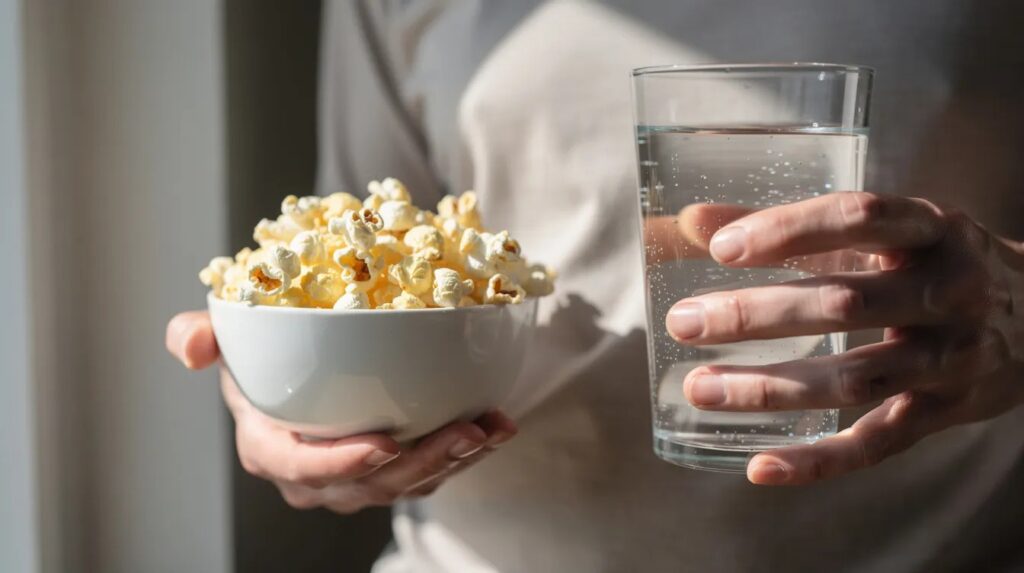
Keeping Your Teeth Clean: The Post-Popcorn Cleaning Routine
Cleaning your teeth after popcorn is pretty important to prevent plaque buildup. Swish some water around in your mouth after you’ve eaten the popcorn, then floss very carefully, especially around the back teeth. Flossing is huge when it comes to getting rid of those pesky popcorn hulls.
You’ll want to brush and floss after eating popcorn to get rid of any debris that’s stuck around. Use some floss or a water flosser to get around the tight spots, and don’t even think about using a toothpick to pull out a popcorn hull. That’s just going to make things worse.
After about 20-30 minutes, brush those teeth with fluoride toothpaste using a soft-bristle toothbrush. If you need to, chew some sugar-free gum to help dislodge any stuck-on bits until you can get to the toothbrush.