A mouth guard just sits against your teeth and gums for hours; there, it’s prone to bacteria buildup, saliva, and grime with every use. And if you don’t keep it clean, it can cause all manner of problems: bad breath, annoying tastes, and even some serious oral health issues. As you can understand, having a clean mouthguard is quite important; the good news is that taking care of it is a breeze- just a few minutes every day and a weekly deep clean.
Here’s how to properly clean, store, and maintain your mouth guard, plus when it’s time to replace it, to keep your teeth and gums happy and healthy.
- A mouth guard that’s got a buildup of grime can lead to bad breath, a nasty bacterial buildup, gum disease, tooth decay, and even reduce its lifespan.
- So after every use, give it a good brush and rinse immediately with a soft toothbrush and some gentle soap or non-abrasive toothpaste- then let it air dry before sticking it in its case.
- Deep clean it every week with denture tablets, baking soda, hydrogen peroxide, or white vinegar to get rid of stains and nasty odors.
- Steer clear of hot water, bleach, whitening toothpaste, and other harsh chemicals. And store it in a clean, ventilated case.
- Most mouth guards need to be replaced every 6-24 months, depending on how much wear and tear they’re getting.
Why Having a Clean Night Guard Matters for Your Dental Health
As any dentist will tell you, your night mouth guard is right up against your teeth and gums, creating a perfect environment for harmful bacteria to take hold. And that can lead to bad breath, gum irritation, infections, gum disease, and even tooth decay. Studies have found contaminated mouth guards to be riddled with bacteria like Staphylococcus aureus, Streptococcus mutans, and Candida, which can even make their way into your bloodstream in extreme cases.
Keeping your mouthguard clean also protects your fillings, crowns, and implants by keeping bacteria exposure to a minimum – it stops stains, warps, and surface damage while also giving it a longer lifespan.
How Long Does Cleaning a Mouth Guard Take?
You’ll be amazed how fast it can be done; it’s just 2-3 minutes a day to give it a good rinse, brush, and air dry after removing your night guard or finishing up with sports.
And a weekly deep clean in just 10-20 minutes, soaking in something like denture tablets or baking soda, is a breeze. Just be sure to give the case a quick clean every few days to avoid recontamination.
It’s so much easier to spend a few minutes cleaning your guard than trying to deal with all the problems that can come from neglecting its care.
The Fight Against Bacterial Growth: Your Daily Cleaning Routine
Cleaning your mouth guard after every use is the key to keeping it free of problems and should be a part of your overall oral hygiene routine. Here are the simple steps for regular cleaning:
Give it a rinse straight away. Use cool or lukewarm water to get rid of any loose debris – don’t use hot water; that can warp it.
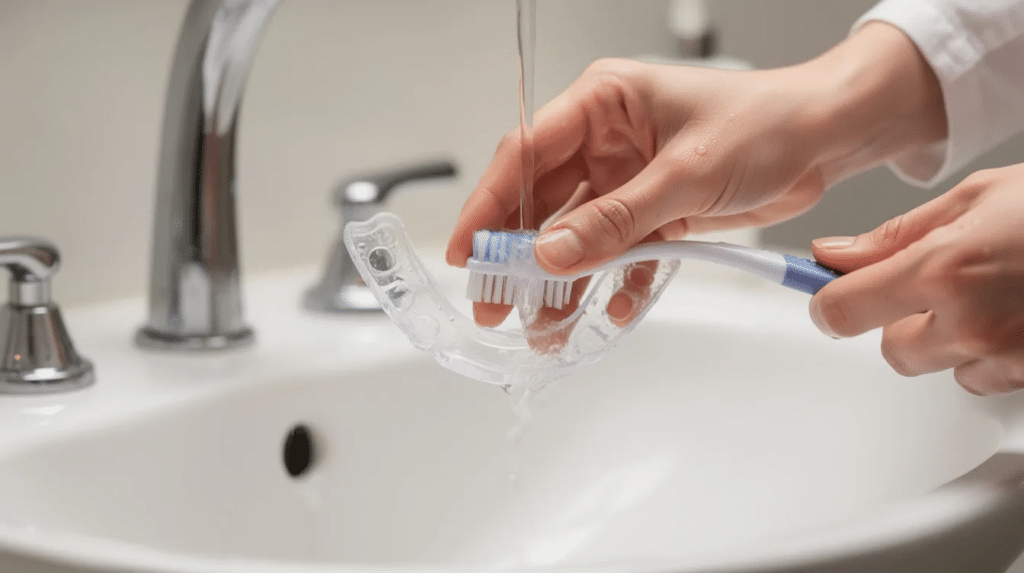
Gentle Brushing. Use a soft-bristled toothbrush with some dish soap or non-abrasive toothpaste, then give it a good rinse to get rid of all soap residue.
Air dry it. Let the guard dry completely for at least 15-30 minutes before sticking it in its case, as moisture just makes it more susceptible to bacterial growth.
The whole thing will take just a few minutes – and fits easily into your daily oral care routine.
Denture Cleaner, Baking Soda? How to Deep Clean a Mouth Guard Once a Week
Getting a thorough cleaning every week is a must, especially if you start to get that “mouth guard smell”, look cloudy, or you’ve been sick. Here are the four most effective methods to get it sparkling clean:
Denture cleaner soak. Just pop a non-abrasive denture cleaning tablet in some warm water, soak the guard for 5-15 minutes, and it’s good as new.
Baking soda soak. Mix 2 teaspoons of baking soda with a cup of water and soak the guard for 15-30 minutes to get rid of any nasty, persistent odors and loosen up mineral deposits.
Hydrogen peroxide soak. Mix equal parts of 3% hydrogen peroxide and water, soak the guard for 10-30 minutes, then give it a good rinse and let it air dry.
White vinegar soak. Soak the guard in a homemade cleaning solution of one part white vinegar to three parts water for 15-30 minutes to remove any calcium deposits and grime – then rinse well or follow up with a quick hydrogen peroxide soak to get rid of the vinegar smell.
Just be careful not to leave it soaking for more than an hour, or it might weaken some of the plastics. Always follow the product or dentist guidelines and give it a good rinse with cool water before air drying.
Cleaning Different Types of Mouth Guards (Night vs. Sports vs. Store-Bought)
Most types of mouth guards are the same, but materials differ in thickness and heat sensitivity, so some need extra care.
Custom Nightguards are typically made from tough, long-lasting acrylic or dual-layer EVA and are used to avoid teeth grinding. Give them a quick brush with some mild soap every day, do a deeper clean once a week, and try to avoid getting them wet with scalding hot water – that’ll help keep that precise fit.
Sports MouthGuards get a real beating – they’re exposed to sweat, dirt, and getting passed from person to person. Rinse them off as soon as you’re done using them, give them a soap wash, and deep clean them at least once a week – or after you’ve had a really brutal game outside. There are even sprays containing chlorhexidine that can help cut down on bacteria.
Boil and bite guards are a bit of a soft touch – they warp easily. So try to use lukewarm water, no harsh or prolonged soaks, and be prepared to replace them every 6-12 months. If you can find the manufacturer’s instructions for cleaning, be sure to follow those.
Storage Best Practices: Let it Air Dry Completely & Store it Right
Proper storage is almost as important as cleaning – it really helps keep that mouth guard in good shape.
Always make sure your mouth guard is dry before you put it away – don’t put damp ones in storage or you’ll just be asking for mold, fungi, and bacteria to start growing.
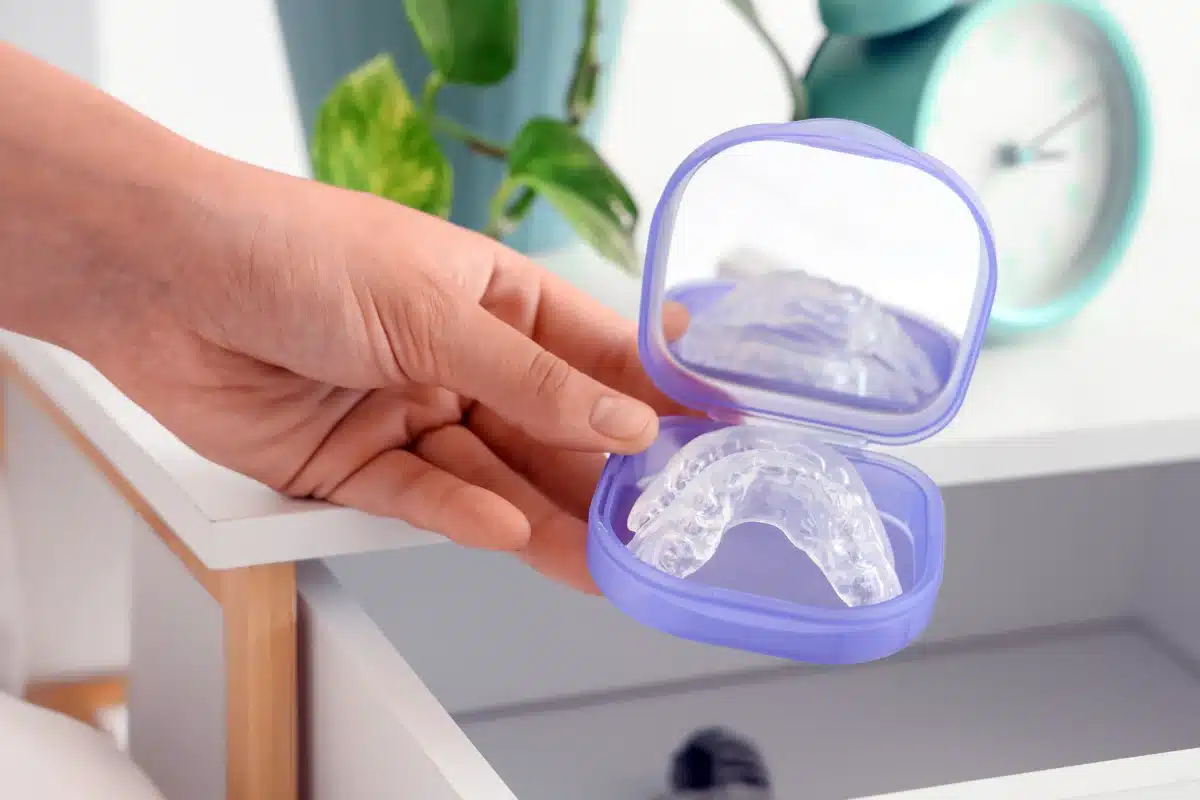
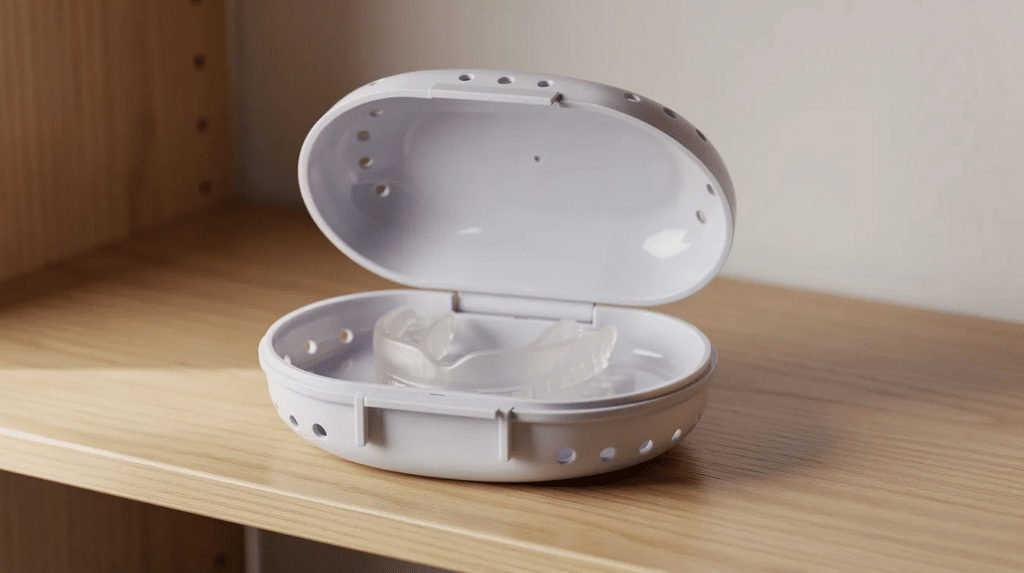
Store it in a hard, well-ventilated case in a cool, dry spot away from heat and sunlight. Don’t store it in bathrooms – that’s where the humidity is, and that’s where all the nasty stuff thrives.
Clean your mouth guard case with warm soapy water once a week and make sure it’s completely dry before you use it again. Replace that case every 6-12 months or sooner if it gets all cracked or stained.
Be sure to keep it away from pets – especially dogs – and slap a label on it so kids or athletes don’t accidentally swap it with someone else’s.
Products and Methods to Avoid When Cleaning a Mouth Guard
You want to be careful what you use on your mouth guard – don’t use anything that’ll damage it, okay?
Heat: Don’t use hot water, dishwashers, or microwaves to clean it – that will just warp the plastic and leave you with a useless mouth guard.
Chemicals to avoid: Don’t use bleach, household disinfectants, or mouthwash with booze in it, and don’t scrub it with gritty whitening toothpaste either.
Some mouth guard cleaners contain persulfates that might give you an allergic reaction, so be sure to read the labels and stop using it right away if you get any signs of irritation.
Safe alternatives: Stick with mild soap, 3% hydrogen peroxide, baking soda, and mouthwash without booze. That way, you can get your mouth guard clean without causing any damage.
When to Replace Your Mouth Guard
Even if you take good care of your mouth guard, eventually it’s going to wear out. It’s good to replace it before it’s too worn out.
Replace it if you see any cracks, holes, or discoloration, or if it’s just plain stinky after cleaning. And if it doesn’t fit right anymore – that’s a sign it’s time for a new one.
Typical lifespan ranges:
| Guard Type | Expected Lifespan |
| Custom night guard | 2–5 years with proper care |
| Boil-and-bite guard | 6–12 months |
| Stock sports guard | One season or sooner |
Most mouth guards should be replaced every 6 to 12 months. If you’re a kid, you might need to get a new one every 6 months because your teeth are growing so fast. And if you play sports, you should get a new one after any big hit, even if it doesn’t look like it’s damaged.
Professional Deep Cleaning and Dental Checkups
You can take good care of your mouth guard at home, but professional cleanings during your regular dental appointments help keep it in the best condition. Dentists use specialized equipment and cleaning solutions that remove buildup more effectively than home cleaning.
Bringing your mouth guard to your regular dental visits also allows your dentist to inspect it for wear, confirm it still fits properly, and check for signs of teeth grinding or jaw problems that may cause it to wear out faster.
Frequently Asked Questions About Cleaning a Mouth Guard
How often should I give my mouth guard a deep clean?
Deep clean your mouth guard at least once a week, but if you’ve got kids, allergies, gum disease, or asthma, you might want to do it a bit more often. If you’re ever feeling under the weather, give your mouth guard a good deep clean as soon as you can.
Can I use baking soda every day to clean my mouth guard?
Baking soda is fine to get rid of unpleasant odors and stubborn stains, but don’t scrub your mouth guard with it every single day – especially if it’s a soft one. Use it as a special occasion soak or paste and stick to mild soap for your everyday cleaning.
What if my mouth guard still smells after cleaning?
Try using some vinegar and then some diluted hydrogen peroxide to deep clean it. If the smell still lingers, there might be bacteria that’s penetrated the material, and it’s probably time to get a new one.### Is it Ever Okay to Soak Your Mouth Guard in Mouthwash Overnight?
A short 10 to 30 minute dip in diluted, alcohol-free mouthwash is totally fine, but be sensible – don’t leave it soaking overnight. On the other hand, if you do use alcohol-based mouthwash, be aware it can damage the plastic. Once you’ve soaked it, give it a good rinse and let it air dry.
Do You Really Need to Clean the Mouth Guard Case?
You bet you do! A grimy case can easily go ahead and re-glue all over a clean mouth guard in a flash. This really shouldn’t be that hard – just give it a rinse with warm, soapy water every now & then, let it dry completely, and replace it every 6 to 12 months or if the thing gets all cracked or stained.