

Many parents will wonder when it’s the right time for their child’s first dental visit. The recommendation is actually a lot sooner than you might think: ideally by age 1 or as soon as that first tooth starts poking through the gum line, whichever comes first.
In this guide, we’ll give you the answer to “when to take kids to dentist”, and you’ll learn why having those early visits will set them up for lifelong oral health, help prevent all sorts of dental problems, and get them in the habit of taking good care of their teeth.
- Most kids should have their first dentist appointment by the time they’re 1 year old or within six months of seeing that very first tooth come in.
- Baby teeth might only be around for a few short years, but they play a vital role in helping your child chew their food properly, develop their speech, and even guide those pearly whites that come in later into the right spot in their mouth.
- After that first visit, most kids should come back to see the dentist every six months or so, unless their pediatric dentist thinks they need to come in more often.
- The first appointment usually isn’t a big deal; it’s all about making sure your child gets off to a good start, gets some basic education, and gets comfortable with the dentist’s chair. They’re not out to fix any problems, just to help you get your child on the right track.
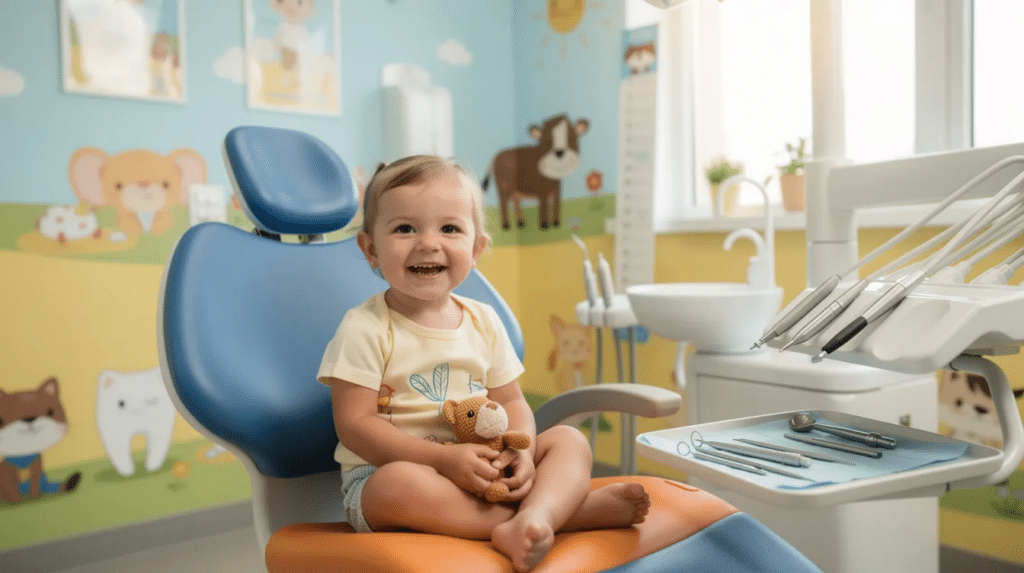
Why Timing Matters: When Should Your Child First See the Dentist?
The American Academy of Pediatric Dentistry advocates for a child’s first dental visit by the time they’re 1 or within six months of that first tooth poking through the gum line. Having that first visit early is super important to setting the foundation for lifelong dental health. It helps your child establish a “dental home” and also gives the dentist a good baseline for tracking how their teeth and mouth are developing.
Getting your child to the dentist early allows dentists to catch any problems that might be lurking, like tooth decay or alignment issues, before they become super tricky to deal with. If you wait too long, say until they’re 3 or all their baby teeth have popped through, you increase the risk of your child getting cavities and needing more complicated dental work.
Why Baby Teeth Are Such A Big Deal (Even if They Do Fall Out)
Maintaining healthy primary teeth is pretty essential for helping your child develop properly; we’re talking speech, chewing, and making sure those permanent teeth come in where they’re supposed to. If those baby teeth get lost early because of decay or trauma, the teeth right next to them can start to shift into the space, which can lead to all sorts of problems with crowding or alignment.
If all those cavities cause pain or interfere with your child’s eating or sleep patterns, that’s no fun for anyone. Which is why early dental care is all about protecting those baby teeth through guidance on brushing, fluoride, diet, and habits like thumb sucking or using a pacifier.
What happens at a child’s very first dental visit?
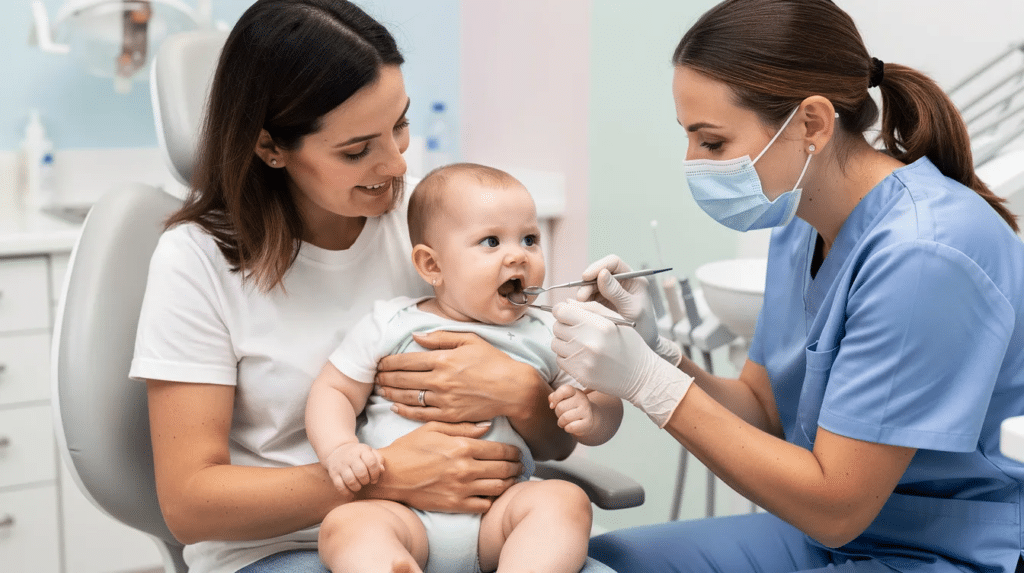
A first dental visit is all about being gentle and stress-free, usually lasting around 30 to 45 minutes. The dentist might:
- Take a look at their teeth, gums, jaws and bite to see if there are any problems with decay or development.
- Get down to their level, literally, by sitting in a knee-to-knee position with the child snuggled up on a parent’s lap.
- Give your child a gentle clean and apply some fluoride varnish when that’s the right thing to do.
- Only take X-rays if there’s a reason to, like hidden cavities or abnormal development in your child’s teeth.
- Educate you on the right way to brush their teeth and have a chat about things like teething, feeding, breastfeeding and pacifiers.
It’s all about giving you the tools you need to keep those teeth clean and healthy and making sure your child feels comfortable with the dentist’s chair.
Milestones & Ongoing Dental Visits by Age
After that first dental visit, most kids will need to come back to see the dentist every six months or so, although if their dentist thinks they need to come more often, that’s what they should do.
- 0-1 years: Clean their gums with a soft cloth before they even get any teeth, then brush their tiny teeth with a smidge of fluoride toothpaste once they start coming in.
- 1-2 years: Focus on preventing those early cavities, keeping those teeth clean and monitoring eating habits while getting your child used to coming to the dentist.
- 3 years: Most kids will have all 20 of their baby teeth by this point and can usually sit by themselves in the dentist’s chair; the dentist might take some X-rays if they think it’s necessary.
- 4-5 years: The dentist will keep an eye on how their teeth are spaced out and how their bite is developing while reminding you to keep brushing and flossing and all that.
- 6-7 years: That’s when the first of your child’s permanent teeth start coming in. The dentist might recommend some sealant to keep those new teeth protected and give you some advice on whether they need to see an orthodontist.
Regular dental visits will help catch any problems before they become super tricky to deal with.
Early Signs Your Child Needs to See a Dentist
Don’t wait for the next appointment if you notice your child has:
- White or brown spots, holes or rough patches showing up on their teeth.
- Red, swollen or bleeding gums, bad breath or pain when they’re eating or brushing.
- Developmental problems like trouble latching, trouble keeping their lips closed or sucking their thumb for ages, which can all affect how their teeth come in.
- Dental trauma, like a chipped tooth, a tooth that’s loose or even a knocked-out tooth, or a facial injury that could affect the development of their permanent teeth.
Even if nothing’s wrong, getting in for an early check-up will give you both peace of mind and keep the dentist informed.
How to Prep for Your Child’s First Dental Appointment
Make that first dental visit as normal and stress-free as possible:
- Try to time the appointment when your child is feeling rested and fed; mornings tend to be best for younger kids.* Use simple and positive language that will help your kid feel at ease, rather than words like “hurt,” “shot,” or “drill”.
- Practice opening wide and counting teeth together (you could even read a kids’ book about visiting the dentist)
- Don’t forget to bring along any relevant medical info, your kid’s meds and any questions you might have, and a favourite comfort item too.
- Keep your cool and choose a dentist’s office that’s a great place for kids, somewhere the staff is used to working with little patients.
Getting ready can make a big difference, helping your kid feel really at ease with dental care from the word go.
FAQ
What if my child is older than 1 and has never been to the dentist?
It’s never too late to start early dental care. Schedule a dental appointment and tell the office it’s your child’s first visit. The dental team can adapt the experience to their age and comfort level while helping prevent tooth decay and establish healthy oral habits.
How often should my child have dental visits after the first appointment?
Most children should have dental visits every six months for checkups and cleanings. Children at higher risk of cavities or other dental problems may need appointments every three months. Your dentist can recommend a schedule based on your child’s oral health and cavity risk.
Do I need a pediatric dentist, or can my child see a general dentist?
A pediatric dentist has specialized training in treating infants, toddlers, and children, including those with behavioral or developmental needs. However, many general dentists also treat children. Ask about their experience and whether the office is child-friendly before booking.
When should kids start using fluoride toothpaste?
Start using fluoride toothpaste as soon as the first baby teeth appear. Use a rice-grain-sized smear twice daily, increasing to a pea-sized amount around age 3 when your child can spit reliably. Fluoride varnish may also be recommended by the dentist.
At what age can my child brush their own teeth without help?
Most children need help brushing until around age 7–8, when they have better hand coordination. Let your child brush first, then have a “grown-up turn” to finish missed areas and maintain good oral hygiene.